
Wood Garage Door Replacement: Switching to Steel
Swapping a tired wood door for steel changes more than the paint color. Here is what happens to weight, springs, upkeep and curb appeal on East Bay homes.
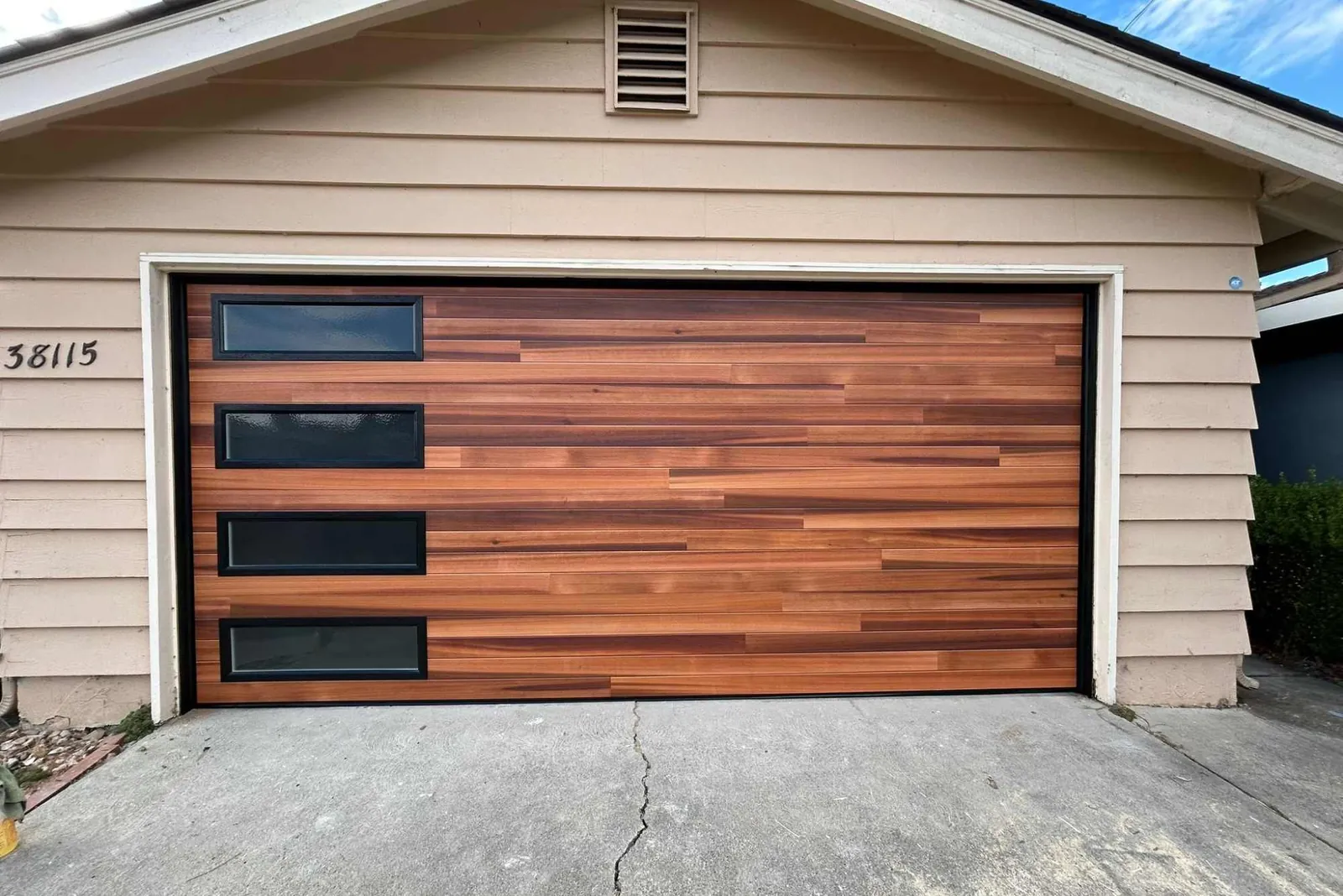
A wood garage door replacement is one of the most visible upgrades you can make to an East Bay home, and steel is the material most homeowners end up choosing. But the switch is not just a cosmetic swap. A steel door weighs differently, loads the springs differently, and asks different things of you over the years. On the older homes around San Ramon, Danville, Walnut Creek and the Tri-Valley, it also has to look right against stucco, siding and stone. Here is what actually changes, section by section, so you can plan the job without surprises.
Why Wood Doors Reach the End Before Steel Does
Wood is a beautiful material and it was the standard on a lot of 1960s through 1980s homes in this area. It is also the material that asks the most from you. Around the Tri-Valley, a wood door lives through 95–105°F summer afternoons, winter rain, and the occasional blast of Mt. Diablo wind. That cycle works on paint and stain first, then on the joints. Once moisture gets behind the finish, the bottom section starts to swell, the panels cup, and the door stops sitting flat in the opening.
You will notice it in small ways before it becomes a repair bill. The door gets heavier to lift by hand. The opener strains. The gap along one side grows. Paint peels from the bottom rail every couple of years no matter how carefully it was prepped. None of that means wood was a bad choice — it means the door has done its duty and the upkeep is no longer worth it to you. That is usually the point where a wood garage door replacement with steel starts to make sense, especially if the rest of the house is low-maintenance stucco or siding.
Weight: What a Steel Door Actually Does to Your Hardware
This is the part most homeowners underestimate. A single-car wood door can weigh considerably more than a comparable steel door, and a two-car wood door can be heavy enough that two people cannot comfortably lift it. Steel changes that — but not always in the direction you expect. A basic 16-foot steel door might be lighter than the wood it replaces, while an insulated steel door with a thick core and heavy glass can come in close to the old wood weight or above it.
What matters is that the new door's weight is known before it goes up. Every door has a weight stamped or documented by the manufacturer, and that number drives the spring calculation. If you install a door that is heavier or lighter than the springs were sized for, the door will not balance. A door that is too heavy for its springs drops hard and strains the opener. A door that is too light lifts too easily and the opener pushes it down with more force than it needs.
- Door weight — the actual shipping weight of the new section set, not a guess from the old door.
- Track and hinge condition — old rollers and worn hinges add drag that the springs then have to overcome.
- Opener capacity — an older opener sized for a lighter door may not be rated for the new one.
- Balance test — with the opener disconnected, the door should hold roughly halfway open on its own.
If the balance test fails after the swap, the springs are the first thing to check. Our garage door spring repair page covers how torsion and extension springs are matched to door weight, and why a spring swap is a normal part of a door replacement rather than an upsell.
Spring Sizing: Why the Old Springs Usually Do Not Carry Over
Springs are sized to a specific door weight, and they are not adjustable. A torsion spring has a wire diameter, an inside diameter and a length that together produce a lifting force matched to the door. Change the door and the spring has to change with it. Even when the new steel door weighs about the same as the old wood one, the springs on a door that has been in service for fifteen or twenty years are already past their cycle life and should not be reused on a fresh installation.
There is also the question of how the door is sprung. Many older East Bay homes have extension springs running above the horizontal tracks. Newer doors and larger carriage-style openings often use torsion springs on a shaft above the door, sometimes paired with a jackshaft opener mounted on the wall beside the shaft. If your home in Alamo, Blackhawk or Danville has a large custom opening, the spring and operator layout may need to be rethought as part of the replacement rather than patched around.
What you should expect from a reputable install: the new door's weight is documented, the springs are matched to that weight, and the door is balanced and tested before anyone calls the job done. If a company wants to hang a heavier steel door on the old springs "to see how it feels," that is a sign to slow down. Springs are the part that carry the whole door, and they are not the place to save a few dollars.
Maintenance: What You Stop Doing and What You Still Do
The biggest day-to-day change with steel is that the painting and staining cycle goes away. A factory-finished steel door holds its color far longer than a wood door in Tri-Valley sun, and it does not swell, cup or grow mildew in the same way. That is the main reason homeowners who are tired of refinishing every few years make the switch.
Steel is not maintenance-free, though, and it is worth being honest about what still needs attention:
- Wash the door once or twice a year with mild soap and water to remove dust and pollen.
- Touch up scratches promptly. Bare steel at a scratch or along the bottom edge is where rust starts.
- Keep the bottom seal in good shape so rain does not sit against the bottom section.
- Lubricate rollers, hinges and springs as part of a seasonal check.
- Watch the tracks and cables — steel doors are rigid, but a hard knock or seismic movement can still push one out of line.
A seasonal tune-up is still the cheapest way to avoid a surprise. Our gate and garage door maintenance service covers the track, spring and roller check that keeps a steel door running quietly. If a door does come off its track — from a car bumper, a wind gust or a small quake — stop using the opener and call for off track door repair rather than forcing it back into the rails.
The Look: Getting Wood-Look Steel Right on an Older East Bay Home
The old objection to steel was that it looked like a commercial roll-up door. That is no longer true. Modern steel doors come with raised panels, recessed panels, carriage-house overlays, decorative hinges and handles, and factory finishes that read as painted wood from the street. The trick is picking the profile that suits the house rather than the one that looks best in a showroom.
On a 1960s or 1970s ranch or tract home in San Ramon, Dublin or Pleasanton, a raised-panel steel door in a color close to the trim usually looks most natural. On a custom home in Alamo, Diablo or Blackhawk with a wide opening, a carriage-style steel door with windows and decorative hardware can match the original architecture better than a plain panel door would. Stucco homes often take a smoother panel; siding homes can carry a woodgrain texture without it looking out of place.
Two practical notes. First, ask to see the door in person or in photos on a similar house — color and texture shift a lot between a catalog and a driveway in afternoon sun. Second, if the old door had windows, decide early whether the new one will too, because glass changes the weight and the spring sizing. You can see how different profiles look on local homes on our recent work gallery.
What the Installation Day Actually Involves
A door replacement is a measured job, not a catalog order. The opening is measured on site, the headroom and side room are checked, and the spring and operator layout is confirmed before the door is ordered. On an older home, that measurement step sometimes turns up a rotted bottom plate, a settled header or a track that was never quite straight — all of which are easier to deal with before the new door arrives than after.
On installation day, the old door and hardware come down, the opening is checked and prepped, and the new door goes up with new springs, rollers and hinges matched to its weight. The opener is tested for travel, force and safety reverse. If the old opener is at the end of its life, that is the moment to replace it rather than ask it to learn a new door — our garage door opener replacement page explains when a repair stops making sense. The job finishes with a balance check and a walk-through of what to watch for.
If you are still deciding between repairing the old door and replacing it, our garage door replacement page lays out the trade-offs. And if the door is stuck open or off its track right now, treat that as an emergency: the opening gets secured first, then the work is quoted.
Planning the Switch: A Short Checklist
Before you commit, gather a few facts so the quote is accurate and the install goes smoothly.
- Measure the opening width and height, and note the headroom above the door.
- Decide on insulation — it matters for weight, noise and heat in a west-facing garage.
- Confirm whether you want windows, and if so, how many.
- Note the age and model of the existing opener.
- Look at the trim and siding color in daylight before choosing a door color.
- Ask whether the old springs, tracks and rollers will be replaced or reused.
We serve San Ramon and the East Bay and Tri-Valley, including Danville, Alamo, Blackhawk, Dublin, Pleasanton, Livermore, Walnut Creek, Concord, Lafayette, Moraga, Martinez, Clayton, Orinda, Castro Valley, Hayward, Union City, Fremont, Sunol, Oakland, Berkeley, San Leandro, Pittsburg, Antioch, Brentwood, Oakley, Discovery Bay, Byron and Benicia. You can see the full list on our service area page. For a measured quote on your wood garage door replacement, call (925) 744-7433 or send the details through our free quote request form.
FAQ
Will a steel door cost more to repair than wood?
Not usually. Steel doors do not need repainting or restaining on a schedule, and dents can often be handled with a single panel replacement rather than a whole door. The parts that wear — springs, rollers, cables — are the same either way.
Can I keep my existing opener when I switch to steel?
Sometimes, but it depends on the opener's rated capacity and its age. A heavier insulated steel door may exceed what an older opener was sized for. The installer should check the rating against the new door's weight and tell you plainly whether it is a match.
Do steel doors rust in the East Bay climate?
Factory-finished steel holds up well here, but scratches and the bottom edge are where rust begins. Touch up bare spots promptly and keep the bottom seal intact so rain does not sit against the door. A seasonal wash and a quick look at the paint are usually enough.
Will a wood-look steel door match my older home?
In most cases, yes. Raised-panel and carriage-style steel profiles come in finishes that read as painted wood, and the right profile depends on the house — stucco, siding and stone all suggest different panel styles. Look at the door on a similar home before you order.
How long does the replacement take?
A standard two-car door is usually a one-day job once the door is on site and the opening is in good shape. Custom sizes, rotted framing or a change in opener layout can extend it. The schedule is confirmed when the door is ordered, not promised over the phone.
A note from Palm Gates and Garage Door Repair
We repair, replace and service garage doors, openers and driveway gates across San Ramon and the wider East Bay. If something in this article sounds like your door, call (925) 744-7433 — we will tell you what it usually means and what the next open appointment looks like.
Keep reading
More articles from the journal
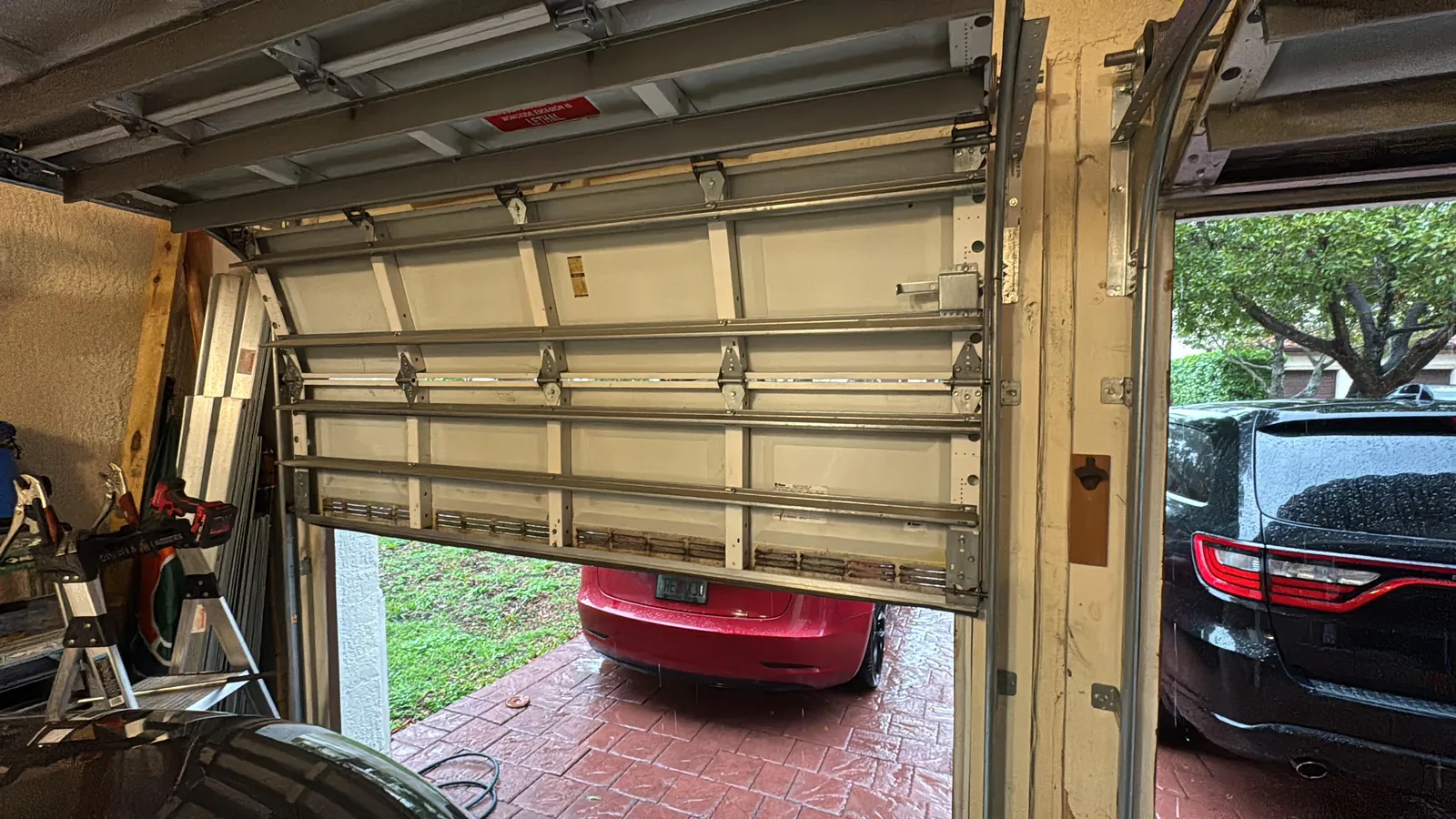
Garage Door Stuck Half Open: Emergency Steps to Take
A garage door stuck half open leaves your home exposed and the door under tension. Here are the safe emergency steps to...
Garage Door Off Track: Causes, Cost and First Steps
A garage door off its track is more than an inconvenience—it's a safety issue. Learn the common causes, how the door is...
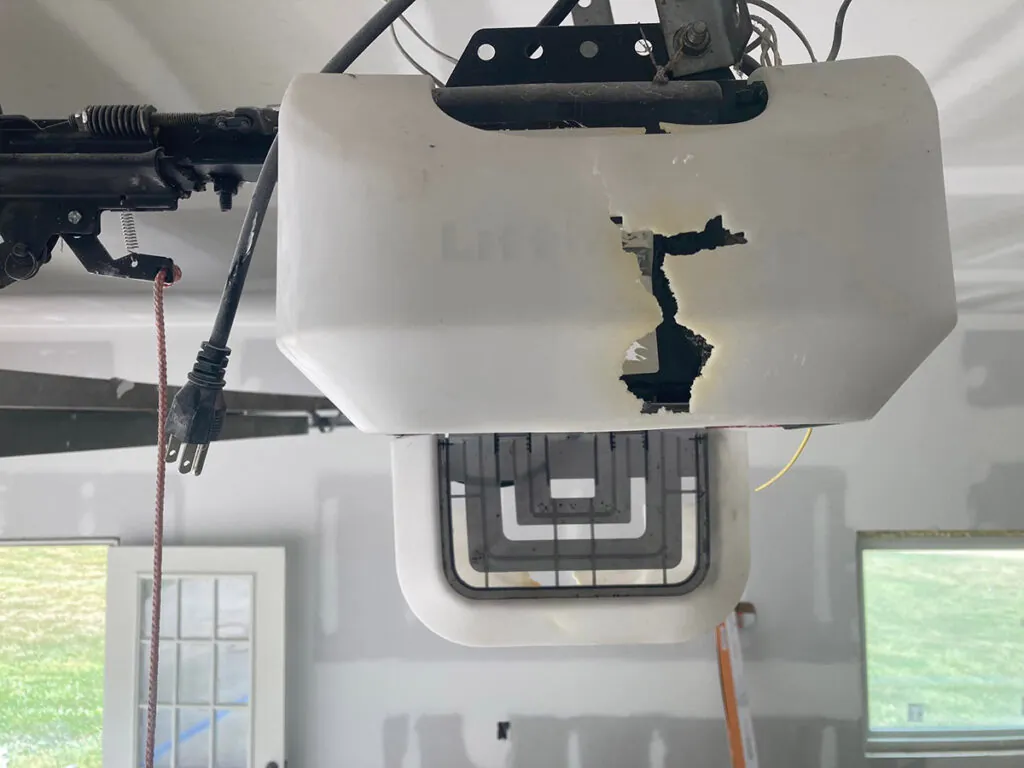
What Garage Door Opener Installation Cost Really Covers
Garage door opener installation cost is driven by drive type, lift rating, battery backup and smart features—plus what t...