
Springs, cables, tracks, panels and rollers
Garage Door Repair in San Ramon, CA
A door that hangs crooked, drags on one side or stops halfway is usually a small mechanical problem that has been getting worse for months. Our garage door repair in San Ramon begins with a full inspection of springs, cables, rollers, hinges and track before anything is adjusted. Call (925) 744-7433 and we will tell you the next open appointment and what to do with the door in the meantime.
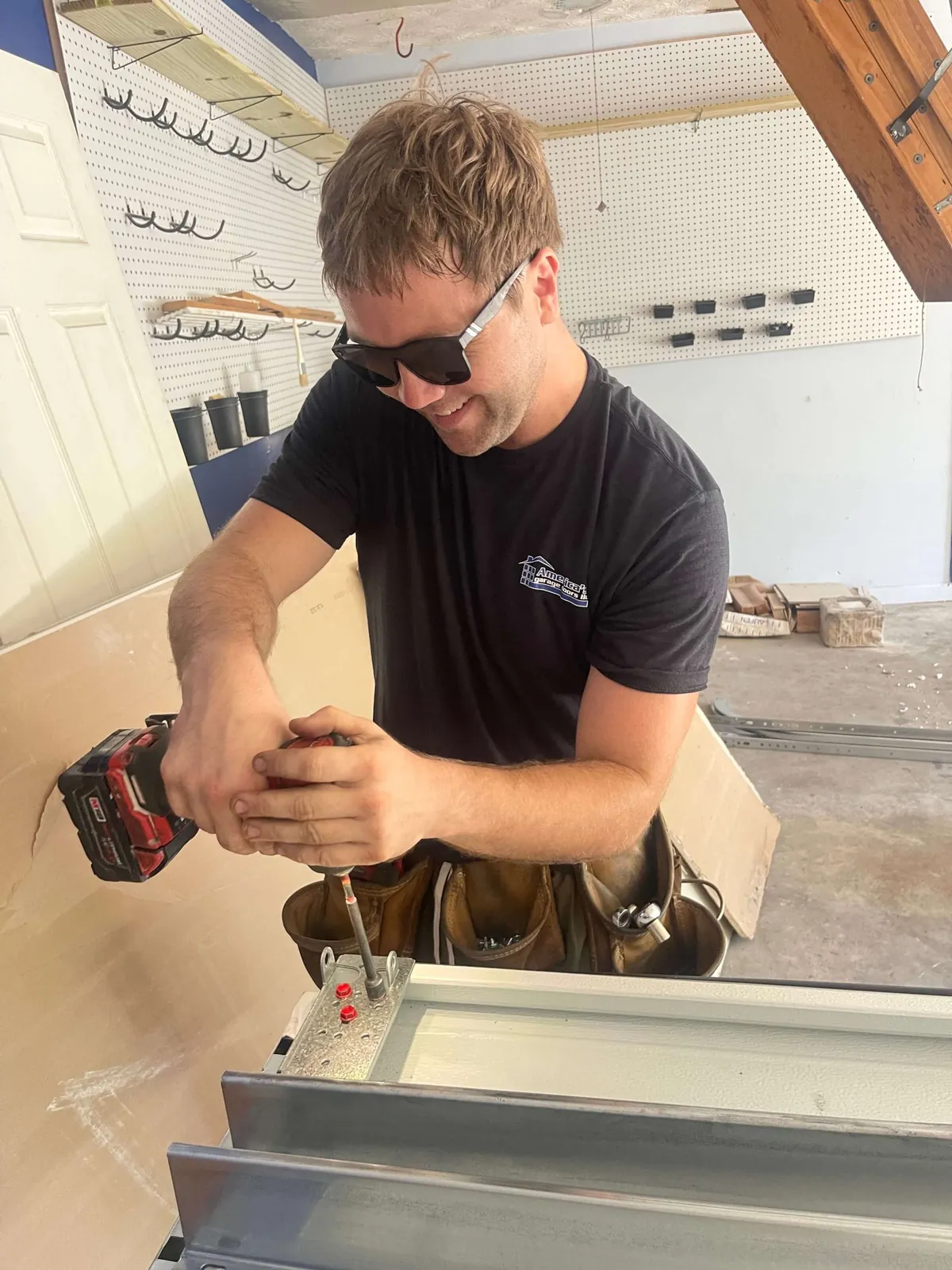
Repair Service
Diagnosis Before Adjustment
A garage door rarely fails without warning. A roller wears flat, a cable stretches a few millimeters, a hinge works loose at its bracket, and the door still opens, so the wear goes unnoticed for months. Then one morning it comes down crooked or stops halfway. Our inspection works through balance, spring tension, cable condition, roller and hinge wear, track alignment and the way the opener pulls the door. Two doors with the same symptom often need completely different repairs, and measuring first is how the price stays honest.
Most of the doors we work on in San Ramon came with the house: a 7 or 8 foot steel sectional door from the 1960s through the 1990s, hung on extension springs or an early torsion system. That hardware was sized for the door, not for fifty summers of 100 degree heat, and Tri-Valley heat cycling is what takes springs, cables and plastic rollers out first. The door is also the largest moving object on most homes, which is why a small alignment problem becomes a bent panel if it is left alone.
- Balance and spring tension checked before any part is replaced
- Sealed bearing rollers and nylon hinges to quiet the door
- Cables, drums and hinges replaced in matched sets
- Written, itemized price after the on-site measurement
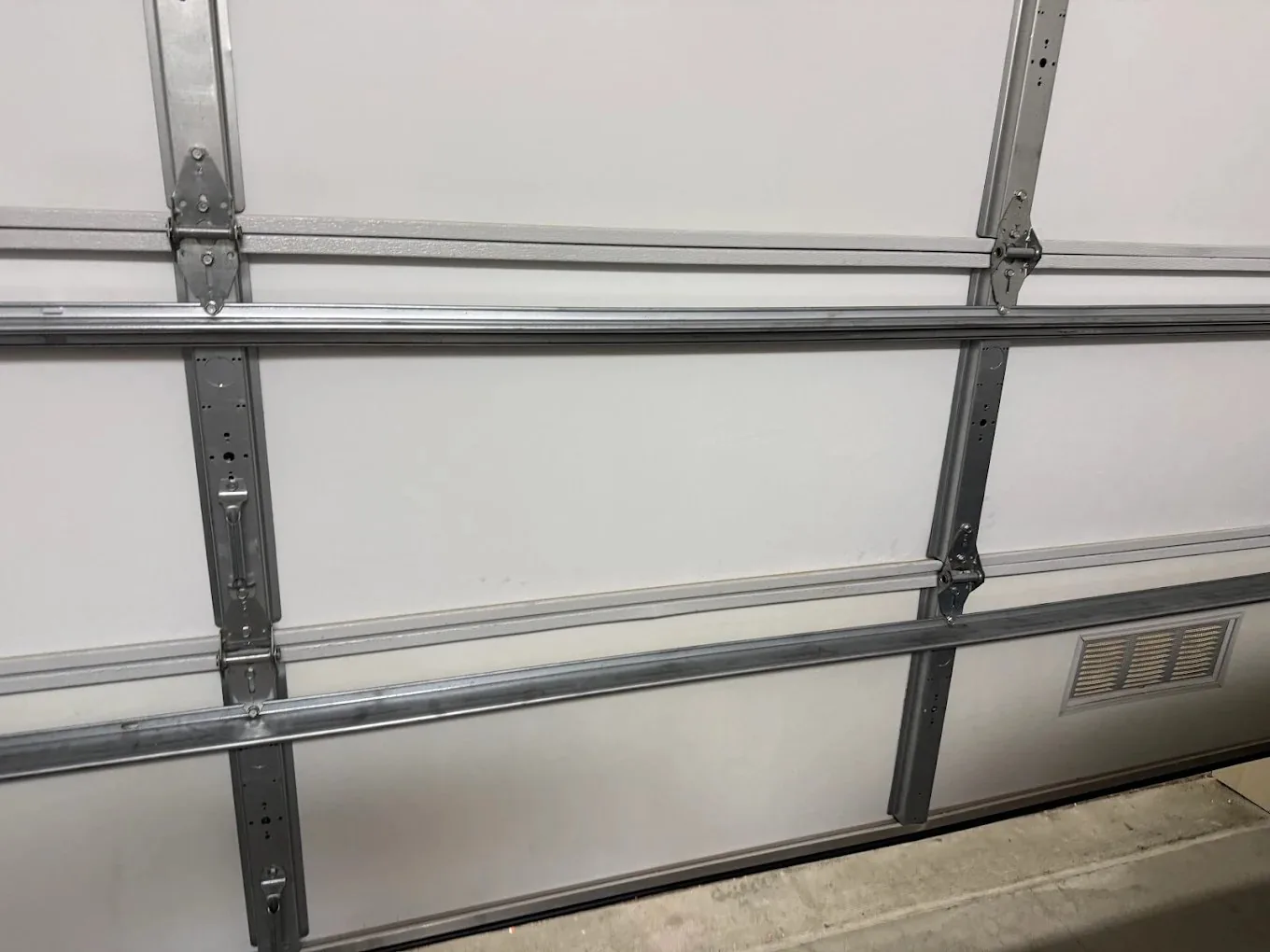
What fails
What We Diagnose on an East Bay Door
Symptoms point in several directions at once. A door that shudders on the way down is usually out of balance. A door that bangs is usually riding on worn rollers or loose hinges. A door that reverses is usually an opener or photo-eye problem, not a door problem at all. These are the calls we handle most often, and what each one usually turns out to be.
-
Door hangs crooked or binds in the track
A stretched cable on one side, a tired spring or a shifted vertical track will pull the door out of square. Left alone, the panels grind against the jamb and the damage moves from hardware to sheet metal.
-
Grinding, squealing or banging
Dry or flat-spotted steel rollers, worn nylon rollers and loose hinge plates are the usual culprits. Sealed bearing rollers remove most of the noise without masking a real adjustment problem.
-
Door reverses or will not close
The opener is doing its job when it reverses. The cause is usually a misaligned photo-eye, a binding track, a floor obstruction or a force setting that is compensating for a door that no longer moves freely.
-
Loose hinges, brackets and lag screws
Vibration over decades works fasteners out of the jamb and panels. Once a bottom bracket or center bearing plate pulls free, the door can drop a corner suddenly, so this is worth fixing early.
-
Door will not latch or lock
Latch bars, slide bolts and trolley-mounted locks drift out of line as panels settle. On doors with an opener, a manual lock left engaged can stall the operator and strip the trolley.
-
Opener strains, hums or trips
An opener that struggles is often lifting a door that is no longer balanced. Fixing the balance first protects the gear, the capacitor and the motor, and it is cheaper than replacing an operator.
Repair or replace
Repair or Replace?
Homeowners ask this on almost every call, and the honest answer depends on the panels and the frame, not on the date on the door. Steel panels that are straight, a sound jamb and a track that is still true usually justify repair. Bent or rusted-through panels, a rotted bottom section or an opening that has settled are a different conversation.
Repair makes sense when
- Panels are straight and the paint or stain is intact
- The track is true and the jamb is sound
- The door is less than about twenty years old
- The problem is springs, cables, rollers or the opener
- You want the existing look kept on a period home
Replacement makes sense when
- One or more panels are bent, cracked or rusted through
- The bottom section and its brackets are rotted out
- The opening has settled and the track cannot be shimmed true
- Repairs are stacking up across springs, panels and opener
- You want insulation, quieter operation or a different look
We will show you what we found, explain what a repair will and will not fix, and let you decide. If repair is the better value, that is the recommendation you get.
How it runs
How a Repair Visit Works
Every visit runs the same way, whether the door needs one part or six. You always know what is being done and what it costs before the work starts.
-
Tell us what the door is doing
A short phone call is enough to prepare for most repairs: when the noise started, whether the door moves by hand, and whether the opener is involved. Mention the door size if you know it.
-
On-site inspection and measurement
We cycle the door, check its balance with the opener disengaged, and measure the opening, spring wire and drum size. That is also when we look for the cause of the symptom rather than the symptom itself.
-
Written, itemized price
You get the parts and labor in writing before anything is handed to us. If we find something else while working, we stop and ask rather than adding it to the bill.
-
Parts matched to California hardware
Most 7 and 8 foot doors here take standard stock springs, cables and rollers, so common repairs are not held up by special orders. Custom or older wood doors are measured for the correct replacement.
-
Repair, adjust and cycle-test
After the parts are fitted, the door is run through repeated full cycles and the opener force, travel limits and safety reverse are reset. A repair is not finished until the door is quiet and balanced.
-
Walk-through and paperwork
We show you the old parts, explain what failed, and leave the invoice with the coverage terms on it. Anything worth watching, such as a cable near the end of its life, gets written down.
What moves the price
What Moves the Price
Garage door repair is priced by the work the door actually needs. A single worn roller and a pair of torsion springs are very different jobs, so quoting a number over the phone is guesswork. These are the things that change the figure.
- Door size and construction A single car steel door carries lighter hardware than a 16 foot insulated door or a wood carriage door. The parts and the labor both scale with the door.
- Spring type and length Torsion springs are priced by wire gauge and inside diameter, and longer springs cost more than short ones. Extension springs are usually less expensive but come in pairs and need safety cables.
- Parts grade Stock springs are rated around 10,000 cycles. High-cycle springs, sealed bearing rollers and heavier hinges cost more up front and last materially longer in a hot climate.
- How many things are out of adjustment One symptom usually means one part. A door that has been binding for a year may need rollers, hinges, cables and a track reset, which is more labor but stops the damage repeating.
- Opener and safety equipment If the opener is involved, travel limits and force settings need resetting, and a missing photo-eye or a dead backup battery adds to the job. Those are safety items, not upsells.
- Access and headroom Low-headroom setups, exposed beams, storage racks and tight side clearance all change how long the work takes and which parts fit.
You get a written, itemized price after the on-site measurement, and it does not change unless you approve a change.
Aftercare
Coverage Written on the Invoice
Coverage is the part of a repair that homeowners think about later, usually the day after the truck leaves. Ours is stated on the invoice in plain language: which parts carry a manufacturer warranty, how long the workmanship is covered, and what would void it, such as painting over a hinge or hanging weight from the door.
It also matters what is not covered. A repair fixes what was measured on the day, so a door where we replaced a spring and rollers is not suddenly warranted against a cable that was already frayed. When we see something close to the end of its life, we write it down and tell you, so nothing fails as a surprise.
- Coverage terms printed on the invoice, not left to memory
- Manufacturer terms for springs and hardware handed over in writing
- Adjustment visits handled under the same terms
- Old parts left with you on request so you can see what failed
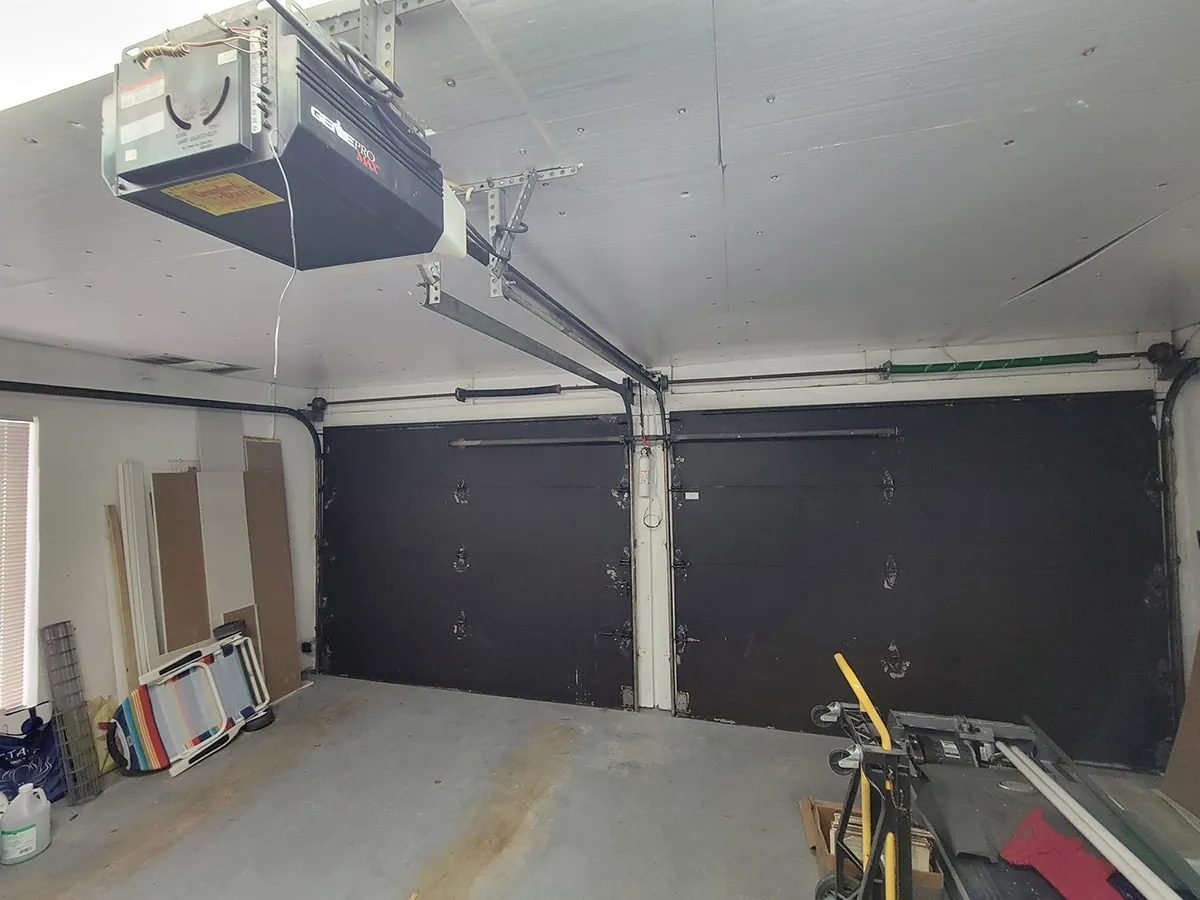
Local service
Working San Ramon and the Tri-Valley
Our address is 4550 Norris Canyon Rd, San Ramon, CA 94583, which keeps most of the Tri-Valley within easy reach. In a normal week we are in Dublin and Pleasanton for older steel doors, in Danville and Alamo for hillside homes where the door sits under a deck or behind a retaining wall, and out to Alamo and Livermore where wind coming off the hills works the track and rollers loose.
The housing stock changes the repair. San Ramon and Dublin have thousands of 1960s to 1990s tract homes on 7 and 8 foot steel doors whose original springs are at or past end of life. Alamo, Danville, Blackhawk and parts of San Ramon have larger wood and carriage doors on LiftMaster operators, where the repair is often about hinge wear, panel weight and opener force rather than steel panels. Livermore, Hayward and Union City add heat and wind, Alamo and Blackhawk add slope and seismic movement, and Dublin, Pleasanton, Livermore and Castro Valley are newer homes where the hardware is younger but often under-sized for a wider insulated door.
Palm Gates and Garage Door Repair
Speak to the crew that will actually do the work.
- (925) 744-7433
- 4550 Norris Canyon Rd, San Ramon, CA 94583
- Mon–Fri 7am–7pm · Sat 8am–5pm
- info@palmgatesandgaragedoorrepair.com
Questions
Garage Door Repair questions, answered
The questions we are asked most often on the phone about garage door repair in san ramon in San Ramon and the East Bay.
How do I know whether my door needs a repair or a replacement?
How long does a garage door repair take?
Why does my door reverse before it touches the floor?
Can an off-track door be repaired, or does it need new panels?
Do I need a permit in Contra Costa County for garage door work?
What does garage door repair cost in San Ramon?
Will you work on a wood or carriage door in Alamo or Danville?
What should I do with a broken door while I wait for an appointment?
Related services
Often booked alongside this
Driveway Gate Repair
Swing, sliding and ornamental gate repair
Automatic Gate Opener Repair
Operators, arms, controls and access devices
Gate Installation
Driveway and entry gates, measured and set true
Part of a group of garage door and gate companies: Palm Garage Door Repair & Gates, 911 Garage Doors Boca Raton, North Miami Garage Doors, Red Oak Garage Door .