
A seasonal check beats a surprise breakdown
Garage Door Maintenance in San Ramon, CA
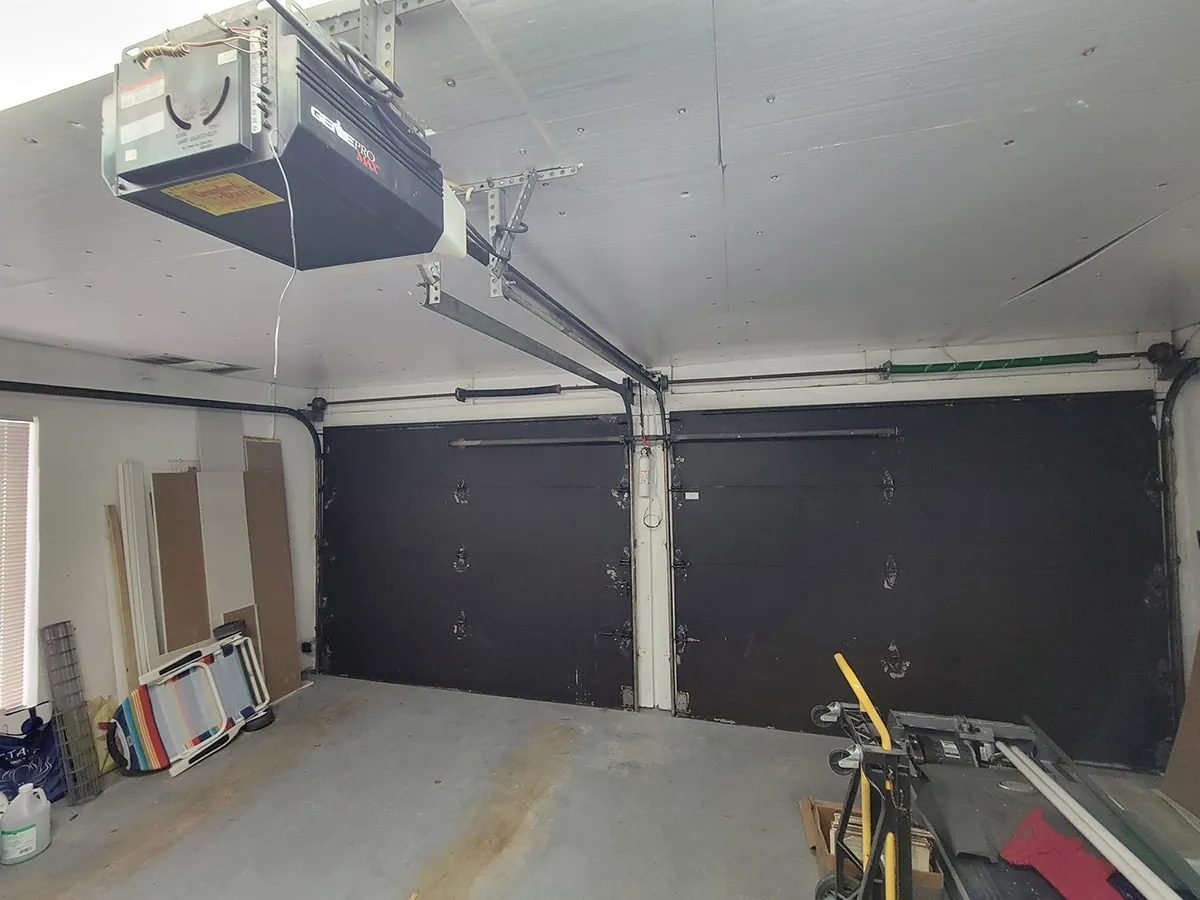
Garage door maintenance is not about wiping a bit of oil on the springs and calling it a day. In this climate a door gets two distinct kinds of wear, a dry season that grinds and a wet season that shifts, and each asks for a different check. Our garage door maintenance visits in San Ramon follow a two-season checklist, and you get written findings whether or not any work is needed.
Tune-ups and seasonal care
A Two-Season Climate Deserves Two Visits a Year
San Ramon does not have a gentle garage-door climate. Summer regularly runs past 95 degrees, which dries out lubrication, works springs through their travel and bleaches or warps a wood door. Winter brings rain into the bottom seal and, in the wind corridors below Mt. Diablo, gusts that rattle a door against its track. The parts that fail in August and the parts that fail in January are rarely the same parts.
A tune-up is mostly inspection: balance, spring tension, cable condition, roller and hinge wear, track alignment and the bottom seal. Then comes the part that actually protects the hardware, which is using the correct lubricant in the right places and leaving the wrong ones dry. Finally we test the safety reverse, check the opener force and limits, and write down what we found so you can plan instead of panic.
- Spring, cable and balance inspection every visit
- Correct lubrication on springs, hinges and bearings only
- Track alignment and roller wear check after wind and quakes
- Safety reverse and opener force tested, results written down
What fails
What a Tune-Up Is Actually Looking For
A tune-up earns its keep by finding wear while it is still a small part. Here is what we check and why it matters on a San Ramon door.
-
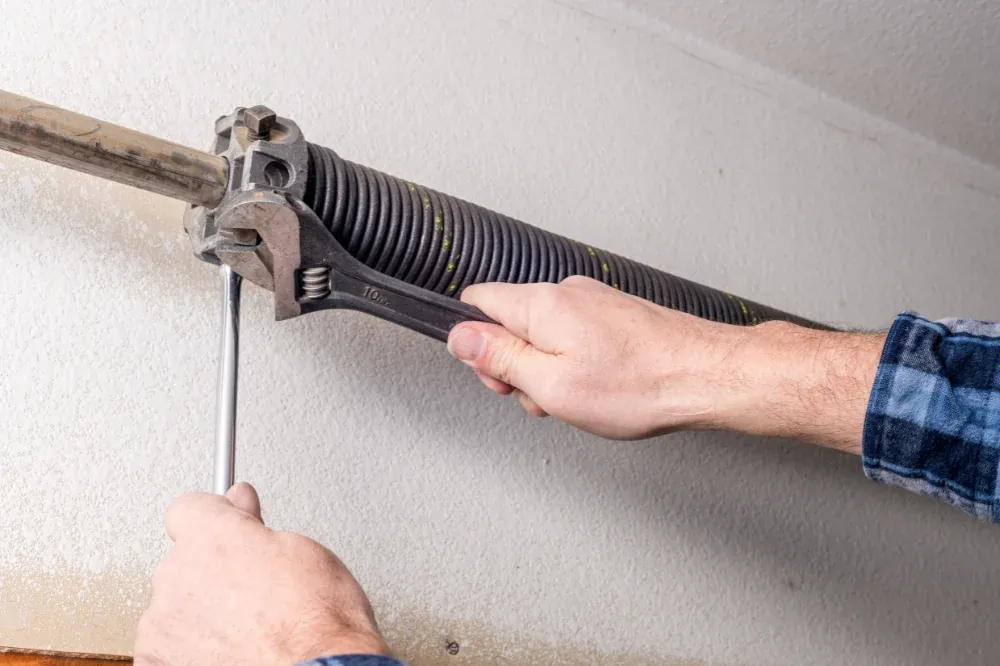
Springs near the end of their life
Springs fail on cycles, not on the calendar. We look at the coil gaps, the age of the spring and the door weight so you know how much life is left.
-
Loose hinges and flattened rollers
A worn roller adds drag and noise. A loose hinge lets the door shift in the track, which shows up first as a rattle over the last few feet of travel.
-
Dry bearings and grinding springs
The dry season strips lubrication from springs, hinges and bearing plates. Dry metal wears faster and puts extra load on the opener.
-
Safety reverse that no longer trips
It should reverse on contact with an obstruction. This is the single most important test on any visit and it takes less than a minute.
-
Bottom seal letting in water and pests
A cracked seal lets rain onto the threshold and into the garage, and it also lets heat out. It is one of the cheapest parts on the door to replace.
-
Tracks pushed out of line
Winter wind and small seismic movement can knock a track off plumb, so the door binds or squeals. It is easy to check and cheap to correct early.
Repair or replace
Repair or Replace: An Honest Comparison
Once a door has been serviced a few times, the question changes from what is worn to whether the door is still worth the money. Here is how we think about it, and we will put both paths in writing so you can decide.
Repair makes sense when
- The door runs correctly and the noise is coming from one worn part
- Panels, frame and hardware are sound and only the springs are tired
- A single component failed, such as a roller, hinge, seal or cable
- The opener is dated but the door is balanced and the parts are available
- You like the door and the repair cost is small against a replacement
Replacement makes sense when
- The same hardware keeps failing and repairs are adding up year after year
- Panels are rusted through, cracked or repeatedly damaged
- The door has run well past its rated cycles and is on borrowed time
- The opener is obsolete with no parts available for controls or drive
- Damage has reached the frame, the track anchors or the springs together
The honest measure is cost per year, not cost today. We give a written, itemized price for both paths after the on-site assessment and we will say plainly when a repair is the better value, because a pressed replacement is a bad deal for both of us.
How it runs
What Happens During a Maintenance Visit
A tune-up should leave you with a door that is quieter and safer, plus a clear picture of what is healthy and what is heading toward a repair.
-
Review history and symptoms
We ask how the door sounds, how often it is used and whether anything changed after the last windy spell or heat wave.
-
Check balance and springs
We disconnect the opener and test where the door rests. A door that will not hold itself is a spring problem waiting to become an opener problem.
-
Inspect hardware and track
Hinges, rollers, bearings, cables and the track are checked for wear, alignment and loose fasteners, including the anchor bolts at the wall.
-
Lubricate the right parts
Springs, hinges, bearings and the opener rail get a proper high-quality lubricant. Tracks are cleaned, not greased.
-
Check seals and alignment
The bottom seal, the weatherstop and the door alignment against the frame are checked for daylight, gaps and water paths.
-
Test safety and document
Auto-reverse, force and limits are tested, then the findings and any recommended work are written down for you.
What moves the price
What Moves the Price of a Tune-Up
A tune-up for one standard door is not the same job as a pair of oversized carriage doors with two openers. These are the factors that shape the written price.
- Number of doors A two-car attached garage usually needs one visit; a separate shop, a carriage door and a gate may not fit in the same appointment.
- Door size and type A 7 to 8 foot steel sectional door and a heavy wood carriage door take different hardware, different springs and different time.
- Age and condition A well-kept door needs inspection and lubrication. A door that has gone years without attention usually reveals a list of small parts to replace.
- Parts replaced Rollers, hinges, seals and cables are itemized separately, so you see exactly what was worn and what it costs before we fit it.
- Opener checks Testing force, limits and battery backup on an opener is included in the visit, but additional remotes, keypads or board repairs are separate.
- Single visit or seasonal plan Booking a dry-season and a wet-season visit together is usually more economical than two separate callouts, and it matches the local climate.
After the on-site assessment you receive a written, itemized price for the tune-up and for any recommended parts, and you are free to take the findings and decide later.
Aftercare
Maintenance, Records and Your Manufacturer Warranty
Manufacturer warranties on doors and openers usually ask for the product to be installed and maintained to the maker specification, and they commonly exclude damage caused by misuse, unapproved parts or a door that was left out of balance. A regular service record does not extend the warranty by magic, but it does give you something concrete to show if a claim is ever questioned.
The fastest way to void coverage is to swap in parts that were not designed for your door, or to substitute a heavier spring without recalculating the door weight. The second fastest is to keep running a door that is out of balance until the opener fails. Both show up in the mechanism, and both are avoidable with a check that takes a few minutes twice a year.
- Dated service record for every visit
- Notes on parts fitted and their manufacturer coverage
- Door and opener condition recorded at each visit
- Written recommendations instead of surprise repairs
Local service
Seasonal Care for San Ramon Doors
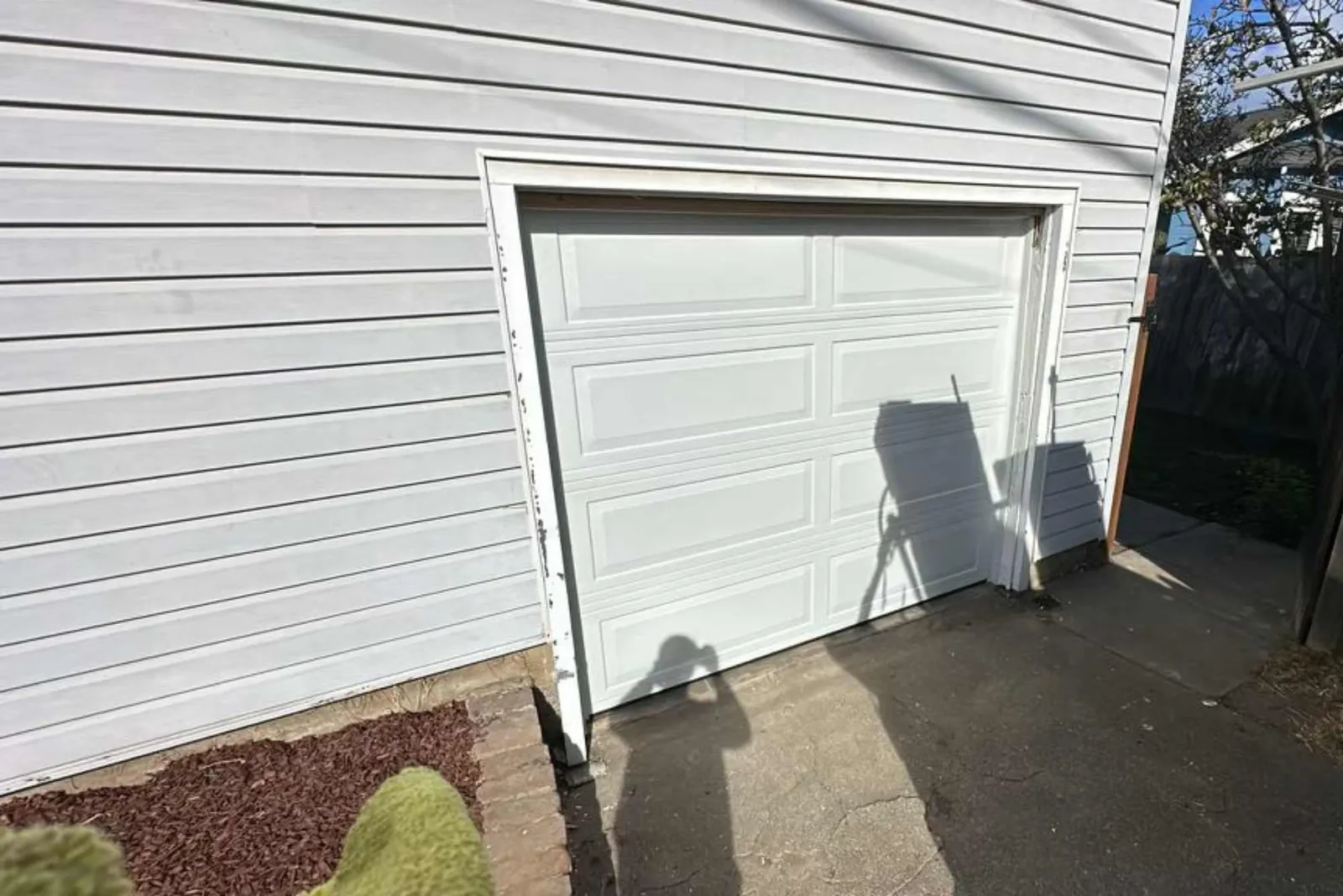
From 4550 Norris Canyon Rd we service doors across San Ramon and the surrounding Tri-Valley, and the calendar here sets the work. The dry-season visit is best booked in late spring, before the long hot stretch that strips lubrication and hardens seals. The wet-season visit belongs in early fall, so balance, seals and track alignment are checked before the rain arrives.
After that first wet storm is also the right moment for a seismic look. Small movements that nobody notices in a house can shift a door track enough to make a door bind, and a door that binds is a door that will break something else within a few months. We cover Dublin, Pleasanton, Danville, Livermore, Alamo, Blackhawk and Castro Valley, and the same two-season rhythm applies across all of them.
Palm Gates and Garage Door Repair
Speak to the crew that will actually do the work.
- (925) 744-7433
- 4550 Norris Canyon Rd, San Ramon, CA 94583
- Mon–Fri 7am–7pm · Sat 8am–5pm
- info@palmgatesandgaragedoorrepair.com
Questions
Gate & Garage Door Maintenance questions, answered
The questions we are asked most often on the phone about garage door maintenance in San Ramon and the East Bay.
How often should a garage door be serviced in this climate?
What is included in a tune-up?
What can void a manufacturer warranty?
Is a garage door supposed to be lubricated, and with what?
Does maintenance mean nothing will break?
Do I need a permit for garage door work in Contra Costa County?
My door is noisy after a windy week. Is that serious?
Can you service the door and the driveway gate in one visit?
Related services
Often booked alongside this
Driveway Gate Repair
Swing, sliding and ornamental gate repair
Automatic Gate Opener Repair
Operators, arms, controls and access devices
Gate Installation
Driveway and entry gates, measured and set true
Part of a group of garage door and gate companies: Palm Garage Door Repair & Gates, 911 Garage Doors Boca Raton, North Miami Garage Doors, Red Oak Garage Door .