
The part that carries the whole door
Garage Door Spring Repair in San Ramon, CA
Garage door springs are the part that carries the door, and when one lets go the door becomes too heavy to lift safely by hand. Our garage door spring repair in San Ramon covers torsion and extension springs, including the high-cycle options that survive Tri-Valley summers. Call (925) 744-7433 and we will give you the next available appointment.
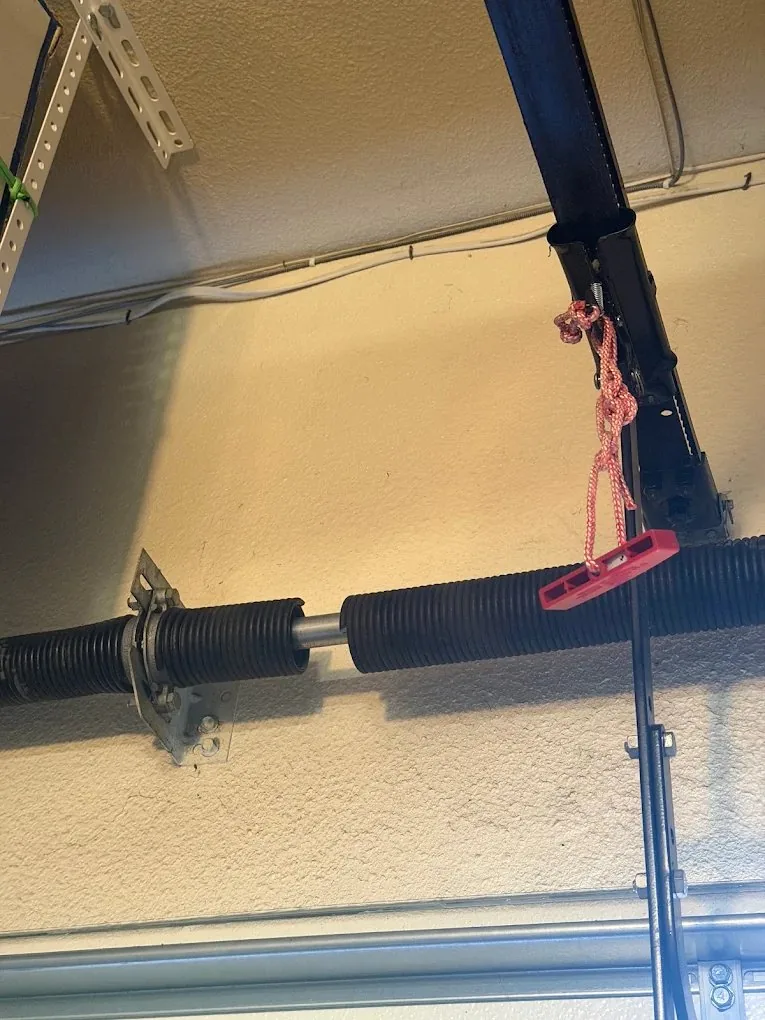
Spring Service
Springs Are Rated in Cycles, Not Years
A spring does not age the way paint does. It is rated in cycles, and one cycle is a single open and close. Stock springs sold with most residential doors are built for roughly 10,000 cycles, which for a household that uses the door four times a day works out to something near seven years of normal life. High-cycle springs are wound from better wire and rated for 15,000 to 25,000 cycles or more. When a spring breaks, the door does not fall, but it does become dead weight that the opener should not be asked to lift.
Heat is the quiet thief here. Tri-Valley summers run 95 to 105 degrees, and metal that cycles through that expansion and contraction loses tension faster than the same spring in a coastal climate. A spring that is already near its limit often breaks on the first hot week of the season or on the first cold morning after it. That is not bad luck, it is a duty cycle finishing, and it is why we size replacements by the door weight and measured wire instead of reaching for whatever is on the shelf.
- Torsion and extension springs matched to measured door weight
- Springs replaced in matched pairs so the door stays balanced
- High-cycle springs available for doors in daily use
- Winding and balance checked against the door, not the label
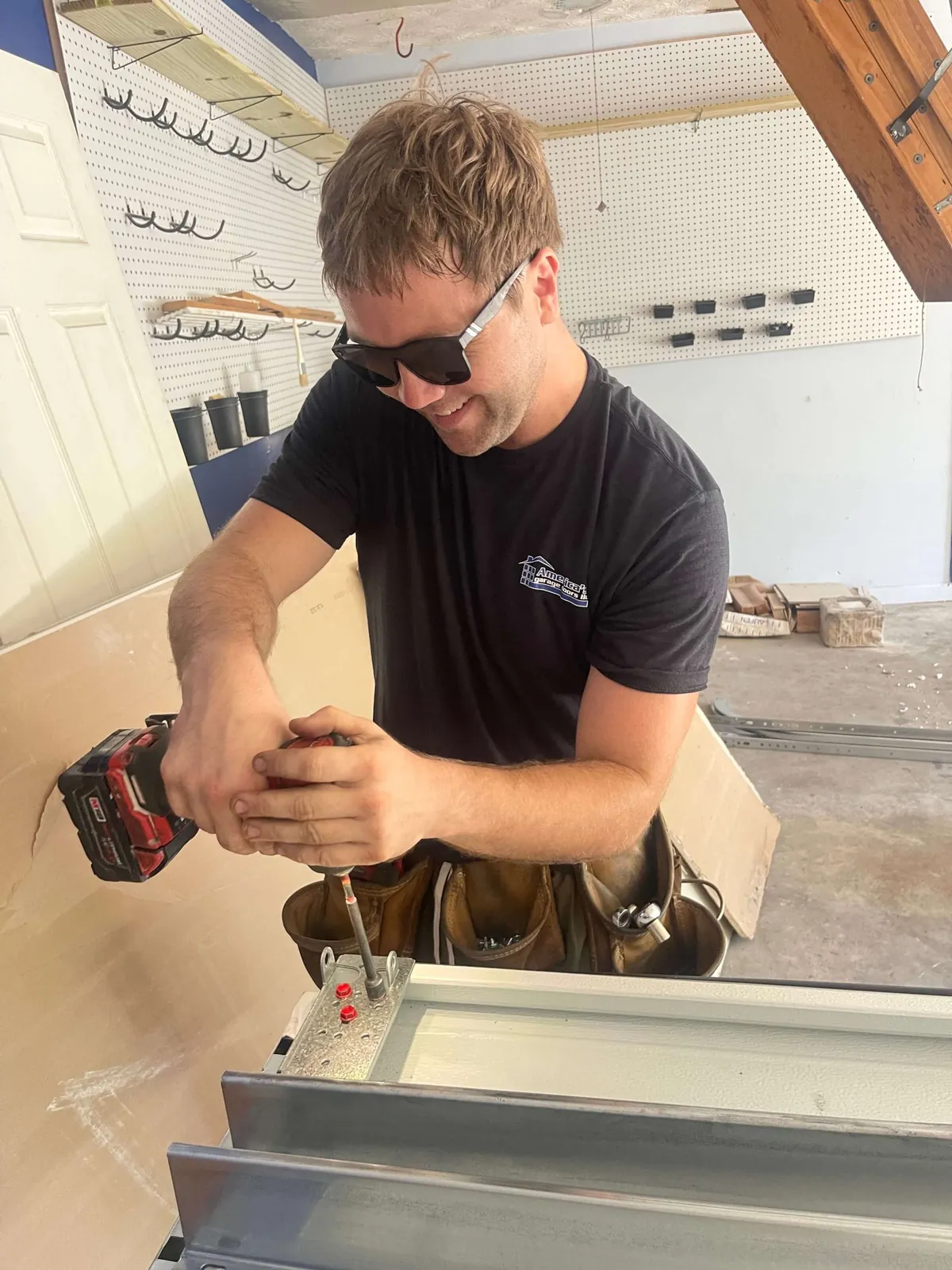
What fails
Signs a Spring Is at the End of Its Life
Most spring failures announce themselves in the weeks before they happen, and the warning signs are easy to read once you know what to look for. These are the ones we hear most often from homeowners across Dublin, San Ramon and Pleasanton.
-
A loud bang from the garage
A torsion spring breaking sounds like a gunshot inside the garage. The door stays shut and feels enormously heavy. Stop using the opener and treat the door as stationary until the springs are replaced.
-
A visible gap or stretched coil
A torsion spring breaks with a clean gap in the coil; an extension spring stretches long and loses its curl. Extension springs without a safety cable through the middle are a genuine hazard when they fail.
-
The door feels twice as heavy
With the opener disengaged, a balanced door lifts with one hand and stays where you leave it. If it drops or needs both arms, the springs are not doing their share of the work.
-
The opener strains or the door drifts closed
An opener that has quietly taken on the door weight runs hot, trips its overload, or lets the door creep down after it closes. That is a spring problem showing up as an opener problem.
-
The door slams or jumps at the bottom
Loose tension or mismatched springs make the door accelerate at the floor instead of easing down. A door slamming on the sill damages panels, and it is a safety issue for anyone standing under it.
-
One spring broke and the other is still holding
On a two-spring door, the remaining spring is carrying a load it was never balanced for. It usually fails within weeks, which is why we quote springs as a pair rather than waiting for the second bang.
Repair or replace
New Springs or a New Door?
When springs fail on an older door, the question is whether the door is worth another set. The answer is usually yes on a straight steel door that opens and closes cleanly, and less clear on a door that is also warped, rusted or hanging on a tired opener.
Replace the springs when
- Panels are straight and the door still closes flush
- Cables, drums and hinges are in usable condition
- The door is balanced once new springs are wound
- You want to keep the existing door and finish
- The failure is a single broken spring, not a collapse
Consider a new door when
- The door also needs panels, cables and rollers
- A wood door is warped, delaminating or water damaged
- You are fighting noise, weight and insulation all at once
- The opener is old enough to be the next failure
- Repairs would cost a large share of a new door
We measure the door, quote the springs on their own, and quote the larger work separately so you can see the difference rather than guess at it.
How it runs
How Spring Replacement Works
Spring work is the part of garage door service with the least room for error, because a wound torsion spring stores a great deal of energy. The routine is careful and it does not change with the size of the job.
-
Identify the spring system
Torsion springs sit on a shaft above the door; extension springs run alongside the horizontal tracks. Which system you have decides which parts, tools and safety steps apply.
-
Measure wire, inside diameter and length
Those three numbers, plus the weight of the door and the drum size, determine the correct spring. A spring picked by door width alone will be wrong often enough to matter.
-
Quote in writing before winding
You get the parts and labor itemized, including whether one or two springs are being replaced and which cycle rating you are paying for. Then the work starts, not before.
-
Release tension and remove the old springs
Cables are secured, tension is released in a controlled way, and the old springs and any damaged winding cones come off. Cables that show broken strands or kinks are replaced at the same time.
-
Fit, wind and balance the new springs
New springs are wound to the calculated number of turns, the door is tested by hand, and the balance is adjusted until it holds position mid-travel. This is where a spring job is made or lost.
-
Reset the opener and test safety reverse
With the door correctly balanced, opener force and travel limits are reset, and the photo-eye and safety reverse are tested. A door that reverses on contact needs the setting corrected, not disabled.
What moves the price
What Changes the Spring Price
Two garage doors of the same width can take very different springs. The price follows the spring that is actually required, not the size of the door opening, which is why we measure before quoting.
- Torsion or extension Torsion springs are wound on a shaft and cost more than extension springs, which run in pairs along the tracks. Extension systems also need safety cables through the springs.
- Wire gauge, inside diameter and length These are the measurements that set the spring price. A heavier door needs thicker wire or a longer spring, and both cost more than the stock spring it came with.
- One spring or a matched pair Most two-car doors carry two springs, and replacing both at once is the standard recommendation. A single spring on a two-spring door leaves the door unbalanced and the second failure weeks away.
- Cycle rating Stock springs are rated around 10,000 cycles and high-cycle springs roughly double or triple that. On a busy door, the higher rating usually pays for itself in avoided repeat visits.
- Related parts found during the job Worn winding cones, scored cable drums, frayed cables or a cracked center bearing plate are often found once tension comes off. We quote them before fitting anything extra.
- Converting extension to torsion Some homeowners choose a torsion conversion on an older extension-spring door for smoother operation and better safety. That involves a shaft, drums and end plates, so it is quoted as its own job.
You receive a written, itemized price after the on-site measurement. Nothing is added without your approval.
Aftercare
What the Spring Warranty Actually Covers
Spring warranties are not all the same and the details matter more than the headline. Manufacturer coverage depends on the cycle rating of the spring you buy, and it covers the spring itself, not the labor to change it. Our invoice splits the two so you can see exactly what you are getting and for how long.
We also tell you what shortens spring life, because most premature failures trace back to something outside the spring. A door that is unbalanced, a drum that has worn out of round, or an opener pulling against a bad adjustment all stress the hardware. Fixing those at the same time is what makes a new spring last its rated life.
- Spring coverage stated separately from workmanship coverage
- Cycle rating of the springs you paid for written on the invoice
- Balance and opener settings documented at handover
- Old broken springs left with you on request for inspection
Local service
Spring Work Across the Tri-Valley
From 4550 Norris Canyon Rd in San Ramon we cover the towns where most of these doors are already on their second or third set of springs. In San Ramon and Dublin, the common job is a pair of torsion springs on a 16 foot steel door, plus cables that have stiffened with age. In Danville, Alamo and Danville the doors are often wider and heavier, so the springs are longer and the balance matters more.
Heat is not the only thing we plan for. Livermore, Alamo, Hayward and Union City see wind off the hills that shakes the tracks and works fasteners loose, which changes how a spring load is transferred. Alamo and Blackhawk add slope and small seismic movement, so a door that was balanced can drift out of alignment. In San Ramon, Dublin, Pleasanton, Livermore and Castro Valley the housing is newer but often on wide insulated doors, and we regularly see springs that were sized for the original door before it was replaced with a heavier one.
Palm Gates and Garage Door Repair
Speak to the crew that will actually do the work.
- (925) 744-7433
- 4550 Norris Canyon Rd, San Ramon, CA 94583
- Mon–Fri 7am–7pm · Sat 8am–5pm
- info@palmgatesandgaragedoorrepair.com
Questions
Garage Door Spring Repair questions, answered
The questions we are asked most often on the phone about garage door spring repair in san ramon in San Ramon and the East Bay.
How long do garage door springs last in San Ramon?
Why do springs break in the summer heat?
If one spring broke, do I have to replace both?
Can I replace my own torsion spring?
Torsion or extension springs, which is better?
The door is noisy now that the springs are new. Is something wrong?
Are high-cycle springs worth the extra cost?
What does spring repair cost in San Ramon?
Related services
Often booked alongside this
Driveway Gate Repair
Swing, sliding and ornamental gate repair
Automatic Gate Opener Repair
Operators, arms, controls and access devices
Gate Installation
Driveway and entry gates, measured and set true
Part of a group of garage door and gate companies: Palm Garage Door Repair & Gates, 911 Garage Doors Boca Raton, North Miami Garage Doors, Red Oak Garage Door .