
Torsion vs Extension Springs: Which Does Your Door Have?
Torsion vs extension springs — how each works, how to tell them apart, and why the repair path differs. A plainspoken guide for East Bay homeowners.
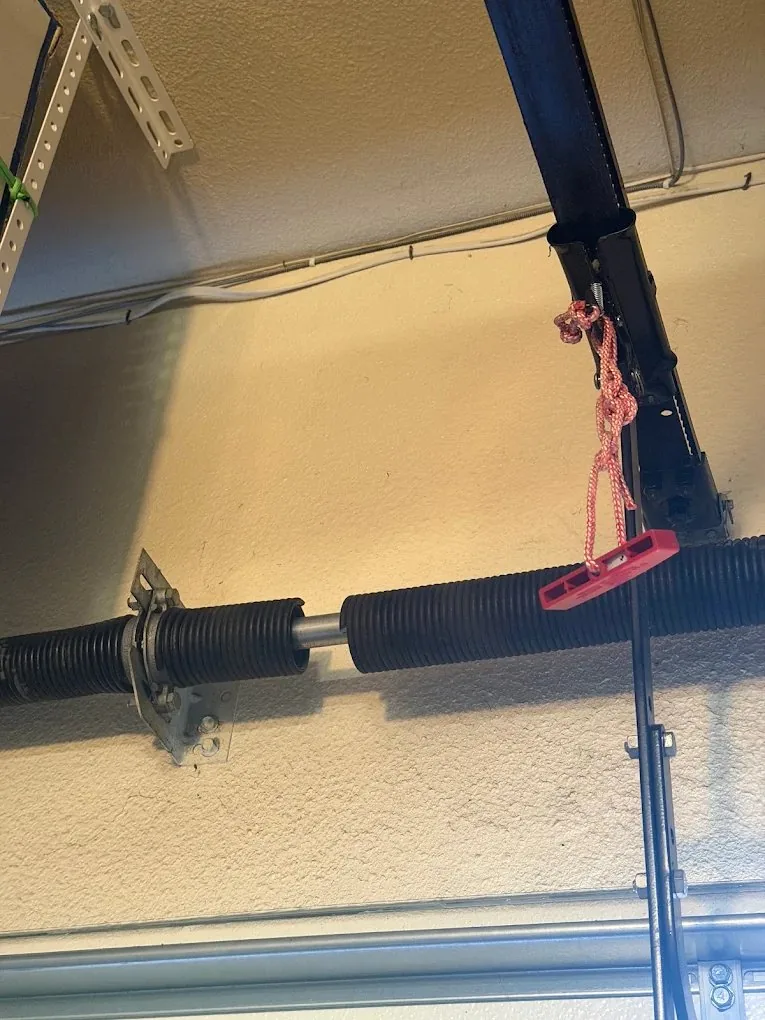
When homeowners ask about torsion vs extension springs, they usually have a door that just stopped working and a spring they have never really looked at. That is normal. Most people go years without thinking about the part that carries the whole door. But the answer matters, because the two systems work differently, fail differently, and are not repaired the same way. In the East Bay and Tri-Valley, where summer heat routinely pushes past 95°F and doors cycle several times a day, springs take a real beating. Knowing which type you have helps you describe the problem on the phone and understand what a technician is telling you when they arrive.
What a Garage Door Spring Actually Does
A garage door is heavy. A single-car steel door can weigh well over a hundred pounds, and a two-car insulated door is heavier still. The opener is not designed to lift that weight on its own; it is designed to move a door that the springs have already made close to weightless. The spring system stores energy when the door is closed and releases it as the door opens. When a spring breaks, the opener suddenly has to lift the full weight of the door, which is why you will hear a bang, see the door come down hard, or find the opener straining and stopping halfway.
There are two common ways to store that energy: a torsion spring mounted on a shaft above the door, or a pair of extension springs running along the horizontal tracks. Both are under load every time the door moves. Both are the first thing a technician checks when a door is heavy, crooked, or stuck. And both are dangerous to handle without the right tools and the right procedure, because they are under tension even when the door looks idle.
How Torsion Springs Work
A torsion spring is a coiled spring mounted on a steel shaft that runs across the top of the door, usually just above the header or behind the center stile. It is anchored at one end and wound tight; when the door closes, the spring winds, and when the door opens, it unwinds and helps lift the door. Most modern doors have one or two torsion springs, and you will often see them as a horizontal coil with a winding cone on one end and a stationary cone on the other.
Because the spring is mounted on a shaft and not stretched along a track, it is compact and works well for heavier doors, including the larger carriage-style doors common in Alamo, Danville and Blackhawk. It also allows for a jackshaft opener, which mounts on the side of the shaft instead of on the ceiling. Torsion springs are generally quieter and easier to balance, but they store a lot of energy and must be wound and unwound with proper bars by someone who knows what they are doing. A broken torsion spring usually shows a clean gap in the coil, and the door will feel extremely heavy when you try to lift it by hand.
How Extension Springs Work
Extension springs stretch rather than wind. You will find them running parallel to the horizontal tracks on each side of the door, usually above the tracks and attached to a bracket at the rear and a pulley-and-cable assembly at the front. When the door closes, the springs stretch; when it opens, they contract and help pull the door up. Older homes and many 1960s–2000s tract homes in San Ramon, Dublin and Pleasanton still have extension springs, often with a safety cable running through the center of the spring.
Extension springs are simpler and less expensive to manufacture, which is why they were common on builder-grade doors. They also tend to fail differently: instead of a clean gap, an extension spring often breaks at the end loop or stretches out of shape over time. When one breaks, the door can drop on one side and bind in the track. That is why safety cables matter. A broken extension spring can whip toward anything in its path, and the cable is there to contain it. If you have extension springs without safety cables, that is worth addressing before anything else.
How to Tell Them Apart Without Touching Anything
You can identify your spring type from the floor with the door closed and the opener disconnected. Do not put your hands on the springs, do not try to wind or unwind anything, and do not pull the emergency release if the door is open. Just look.
- Torsion spring: a horizontal coil on a metal shaft above the door, running left to right. You may see one or two springs, and a winding cone with holes on one end.
- Extension springs: two long springs running front to back along the horizontal tracks, one on each side, often with a cable through the middle and a pulley at the front.
- Look for a gap: a torsion spring often shows a visible gap in the coil when broken. An extension spring may look stretched, bent, or separated at the end loop.
- Check the door weight: with the door closed and the opener released, lift the door by hand. If it feels extremely heavy or will not stay up, a spring is likely broken. Do not force it.
If you are not sure what you are looking at, take a photo from a safe distance and send it to us. We can usually tell you which system you have from a clear picture. If the door is stuck open, off its track, or hanging crooked, treat it as an emergency and keep people and vehicles clear of the opening. Our emergency garage door repair team triages those calls first and secures the opening before quoting anything.
Why the Replacement Path Differs
Torsion and extension springs are not interchangeable. The replacement path depends on the system, the door weight, the track geometry, and the opener. A torsion spring is sized by wire gauge, inside diameter, and length, and it has to be wound to a specific number of turns to balance the door. A technician will weigh the door or match the existing spring, then wind it with the proper bars and test the balance before reconnecting the opener. If one torsion spring on a two-spring door breaks, it is often worth replacing both at the same time so you are not paying for a second service call months later.
Extension springs are matched in pairs, and both should be replaced together even if only one broke, because the surviving spring has already taken the same number of cycles. The safety cables should be checked or added at the same time. On either system, the technician will also inspect the cables, rollers, hinges, and track, because a heavy door often damages those parts before the spring finally goes. That is why a spring call is rarely just a spring call. If the door came off its track or the cables are frayed, we handle that under cable, roller and track repair and off-track door repair as part of the same visit when possible.
One more difference: torsion springs can be converted to a different configuration, and some homeowners choose to switch from extension to torsion when the door is heavy or when they want a jackshaft opener. That is a bigger job than a spring replacement, and it is worth discussing on site rather than over the phone. We itemize the failed part and the price in writing before any work starts, so you can decide with the door in front of you.
Local Conditions That Wear Springs Out
Springs are rated in cycles, not years, and the East Bay climate adds its own wear. Tri-Valley summers regularly hit 95–105°F, and that heat fatigues steel and dries out lubricant. Winter rain and Mt. Diablo wind gusts work the door and the hardware. Small seismic movement can knock a door off its track, which is a different failure but often shows up in the same week as a spring problem. Homes in Blackhawk and Alamo with larger carriage doors and jackshaft openers put more load on the spring system, while the 7–8 ft steel doors in the older tract neighborhoods cycle more often because they are usually the main entry.
A seasonal check is cheaper than a surprise breakdown. Our gate and garage door maintenance visit includes the springs, cables, rollers, hinges, and balance test, and it is a good time to catch a stretched extension spring or a torsion spring that is starting to lose tension. If you are not sure when the door was last serviced, that is usually the first thing to book.
When to Stop and Call a Technician
Spring work is not a DIY job. The springs are under tension, the winding bars can slip, and a door that drops can injure someone or damage a vehicle. If you hear a loud bang from the garage, see a gap in the torsion spring, notice a stretched or broken extension spring, or find the door suddenly heavy, stop using the opener and call a professional. Do not try to lift the door by hand if it will not stay up, and do not leave it open overnight if it is off its track.
For spring repair, cable and roller work, or a full safety check in San Ramon and the surrounding East Bay and Tri-Valley towns, call Palm Gates and Garage Door Repair at (925) 744-7433. We will identify the failed part on site and give you an itemized written price before any work begins. You can also request a free quote through our quote form or see the towns we cover.
FAQ
Can I replace a torsion spring with an extension spring?
It is not a like-for-like swap. The two systems mount differently, load the door differently, and require different hardware and track setup. Converting a door from extension to torsion springs is sometimes possible, but it is a larger job that should be assessed on site by a technician who can check the door weight, track, and opener before recommending it.
How do I know if my spring is broken?
The most common signs are a loud bang from the garage, a visible gap in a torsion spring, a stretched or separated extension spring, and a door that feels extremely heavy when lifted by hand. If the opener strains or the door stops halfway, stop using it and have it checked. Do not try to force the door open.
Do both springs need to be replaced at the same time?
In most cases, yes. Torsion and extension springs are installed as a matched pair and have taken the same number of cycles. Replacing only the broken one leaves an older spring that is likely to fail soon, which means another service call. A technician will confirm what is appropriate for your door during the visit.
Are extension springs safe if they have safety cables?
Safety cables are there to contain a broken extension spring and keep it from whipping across the garage. They are an important safety feature, but they do not make the spring safe to handle or repair yourself. If the cables are missing, loose, or frayed, have them checked before using the door.
How often should garage door springs be checked?
Once a year is a reasonable baseline for most homes, and more often if the door cycles many times a day or the door is heavy. A seasonal maintenance visit checks the springs, cables, rollers, and balance, and it is the best way to catch wear before a spring breaks and leaves the door stuck.
A note from Palm Gates and Garage Door Repair
We repair, replace and service garage doors, openers and driveway gates across San Ramon and the wider East Bay. If something in this article sounds like your door, call (925) 744-7433 — we will tell you what it usually means and what the next open appointment looks like.
Keep reading
More articles from the journal
How to Choose a Garage Door Company Near Me
A local technician's guide to vetting a garage door company: licensing questions, written quotes, warranty terms and the...

Driveway Gate Repair Cost in San Ramon: What Drives the Price
Driveway gate repair cost in San Ramon depends on whether the fault is in the gate or the operator. Here is how diagnosi...
Commercial Garage Door Repair: What East Bay Businesses Should Know
Commercial garage door repair in the East Bay means understanding cycle ratings, safety devices, and scheduling around y...