
Commercial Garage Door Repair: What East Bay Businesses Should Know
Commercial garage door repair in the East Bay means understanding cycle ratings, safety devices, and scheduling around your trading hours. Here’s what shops and warehouses need to know.
Commercial Garage Door Repair: What East Bay Businesses Should Know
Commercial garage door repair is not the same as fixing the door on your house. A shop or warehouse door might cycle 50 times a day, and when it fails, it takes your loading bay, your security, and your staff’s time with it. In the East Bay and Tri-Valley, we see rolling steel doors, sectional doors, and dock doors that have been pushed hard for years. This article covers the three things that matter most for keeping them running: cycle ratings, safety devices, and scheduling repairs around your trading hours.
Palm Gates and Garage Door Repair is based in San Ramon, and we work on commercial doors across the East Bay. We are a local, insured company, and we quote every job in writing after we have seen the door. This is not a sales pitch; it is a practical guide for the person who has to decide whether to patch the door again or plan a replacement.
Cycle Ratings: The Number That Predicts Your Next Breakdown
Every spring, cable, and roller on a commercial door is rated for a number of cycles. One cycle is one open and one close. A residential door might see four cycles a day. A busy shop door can see forty or more. That difference is why the same spring that lasts years on a house can fail in months on a commercial door.
When we look at a commercial door, we ask how many times it opens and closes on a normal day, and whether that number changes by season. A warehouse that receives deliveries in the morning may cycle heavily between 6 a.m. and 10 a.m., then sit idle. A retail shop may cycle constantly all day. The cycle count tells us which components are working hardest and where to focus maintenance.
Manufacturers publish cycle ratings for their springs and hardware. A standard spring might be rated for 10,000 cycles; a high-cycle spring for 25,000 or more. If your door is cycling 40 times a day, six days a week, that is roughly 12,500 cycles a year. A standard spring may be near the end of its rated life in under a year. Knowing this lets you plan a spring replacement before it breaks, rather than after the door is stuck open with a truck waiting.
Cycle ratings also apply to rollers, hinges, and the operator. Cheap rollers can flatten and stop turning, which makes the door drag and wears the opener. Heavier-duty rollers and hinges cost more up front but match the duty cycle of a busy door. When we quote a repair, we match the part to the way the door is actually used, not to the cheapest option on the shelf.
If you do not know your door’s cycle count, start by counting openings for one week. That number, plus the door’s size and weight, is enough for us to recommend the right spring and hardware. For doors that are already showing wear, our commercial garage door repair service covers rolling steel, sectional, and dock doors.
Safety Devices: What Every Commercial Door Should Have
Commercial doors are heavy, and they move fast. Safety devices are not optional. The two most common are photo eyes and a reversing edge or force setting. Photo eyes are a pair of sensors mounted near the floor; if the beam is broken, the door stops or reverses. A reversing edge is a sensitive strip on the bottom of the door that reverses the door on contact. The operator’s force setting controls how much resistance the door can meet before it reverses.
In a shop or warehouse, photo eyes get knocked out of alignment by pallets, carts, and forklifts. A misaligned eye can stop the door from closing, or worse, let it close on a person because the safety circuit has been bypassed. We have seen tape over sensors and disconnected edges more than once. If your door closes without reversing when something is in the way, stop using it and get it checked.
Safety devices also need to match the door. A rolling steel door may use a different edge than a sectional door. A dock door may have a combination of photo eyes and a bottom edge. When we repair a commercial door, we test every safety device and confirm the force setting is correct for the door’s weight. We do not leave a door running with a safety device disabled.
For businesses, there is also a liability question. If someone is injured by a door that should have reversed, the condition of the safety devices will matter. Keeping them working is part of running a safe premises. Our garage door sensor and safety repair page covers the residential side of the same equipment, and the principles are identical.
Scheduling Repairs Around Trading Hours
A commercial door repair that closes your bay for a day can cost more than the repair itself. That is why scheduling matters as much as the work. We book commercial work Monday through Friday, 7:00 a.m. to 7:00 p.m., and Saturday 8:00 a.m. to 5:00 p.m. If your business is closed on a weekday morning, that is often the best window: we can work without interrupting deliveries or customers.
For shops that cannot close, we plan the repair in stages. A door that is stuck open can sometimes be secured first, then repaired when the bay is empty. A door that is off its track is a priority because the opening is not secure. We triage those calls first, secure the opening, and then quote the repair. We do not promise a specific arrival time, but we do give priority scheduling to doors that are stuck open or off their track.
Here is how to make a commercial repair go smoothly:
- Know your door type. Rolling steel, sectional, and dock doors have different parts and different lead times.
- Count your cycles. A week of normal openings tells us which parts to bring.
- Clear the bay. We need room to work and to test the door through a full cycle.
- Tell us about safety devices. If a photo eye or edge has been acting up, say so when you book.
- Ask for the written quote before work starts. We itemize the failed part and the price before we begin.
If your door is stuck open or off its track, call (925) 744-7433. After-hours and Sunday calls are treated as emergency calls or scheduled for a call-back the next working morning; we do not promise round-the-clock attendance or a specific arrival time.
Local Conditions That Wear Out East Bay Commercial Doors
The East Bay and Tri-Valley put specific stress on commercial doors. Summer heat in the Tri-Valley regularly reaches 95–105°F. That heat fatigues springs and can warp lighter-gauge tracks. Winter rain brings moisture that finds its way into rollers and hinges, especially on doors that face the weather. Mt. Diablo wind gusts can catch a door that is partway open and push it off its track. Small seismic movement can do the same.
We also see a mix of building ages. Many commercial properties in San Ramon, Dublin, and Pleasanton were built in the 1980s and 1990s, and their doors are original. A door that was fine for a light-duty tenant may be undersized for a busy warehouse. When we repair those doors, we look at whether the hardware matches the current use. Sometimes the right answer is a heavier spring and rollers; sometimes it is a new door.
Coastal influence in Oakland, Berkeley, and Hayward adds salt air, which speeds corrosion on steel tracks and chains. Inland, the heat does the damage. A maintenance check before summer and before the winter rains catches most of it. Our gate and garage door maintenance service includes a seasonal check of tracks, springs, rollers, and safety devices.
Repair or Replace? A Practical Guide for Business Owners
The decision to repair or replace a commercial door usually comes down to three things: the cost of the failed part, the age and duty rating of the door, and how often it has been failing. A single broken spring on a door that is otherwise sound is a repair. A door that has had three spring failures in two years, with worn tracks and a tired operator, is usually a replacement conversation.
We do not push replacement. We quote the repair first. If the door is near the end of its rated cycles, we say so and explain the options. A new door can be specified for the actual cycle count, which means fewer breakdowns and a longer service life. For businesses that cannot afford downtime, that predictability is often worth more than the lower repair bill.
Panel damage is a common middle case. A forklift clips a bottom panel, and the door still works but will not seal. Replacing one section is often faster and cheaper than a whole door. Our garage door panel replacement service covers single sections, and we match the profile and color as closely as the manufacturer allows.
Operators are the other decision point. A commercial operator that is failing can sometimes be repaired, but if the control board is obsolete, replacement is the practical answer. We carry and fit operators for rolling steel and sectional doors, and we set the force and travel limits to the door, not to a generic setting.
What a Commercial Repair Visit Looks Like
When we arrive, we start by watching the door run. The sound, the speed, and the way it settles tell us a lot. Then we check the springs, cables, rollers, hinges, tracks, and operator. We test the safety devices. We look at the door’s duty rating against its actual use. Only then do we quote.
The quote is itemized in writing. It lists the failed part, the replacement part, and the labor. We do not start work until you approve it. If we find a second issue while we are in there — a frayed cable, a cracked hinge — we show it to you and quote it separately. We do not add work without your approval.
Our workmanship is warranted, and the parts we fit carry the manufacturer warranty. We are a local, insured company based in San Ramon, and we serve the East Bay and Tri-Valley, including the towns we cover. If you want to see the kind of work we do, our gallery has photos of recent jobs.
For a free quote on a commercial door, use our quote request form or call (925) 744-7433. If your door is stuck open or off its track, say so when you call; those calls are triaged first.
FAQ
How often should a commercial garage door be serviced?
It depends on cycles. A door that cycles 40 times a day needs more frequent checks than one that opens twice. As a starting point, schedule a service once a year and after any impact or unusual noise. A seasonal check before summer heat and before winter rain catches most wear.
Can you repair a door while my business stays open?
Often, yes. We can work on one bay while others stay in use, or schedule the repair for a quiet window such as early morning or a closed day. For doors that are stuck open, we secure the opening first, then quote the repair.
What is a cycle rating, and why does it matter?
A cycle rating is the number of open-and-close cycles a spring or part is designed for. A busy commercial door can use up a standard spring’s rating in under a year. Knowing your cycle count lets you plan replacement before a breakdown.
Do you service rolling steel and dock doors?
Yes. Our commercial repair service covers rolling steel, sectional, and dock doors. We also repair operators, safety devices, and the tracks and rollers that guide the door.
What should I do if my door is stuck open?
Call (925) 744-7433. A door that is stuck open or off its track is a priority because the opening is not secure. We triage those calls first, secure the opening, and then quote the repair. We do not promise a specific arrival time.
A note from Palm Gates and Garage Door Repair
We repair, replace and service garage doors, openers and driveway gates across San Ramon and the wider East Bay. If something in this article sounds like your door, call (925) 744-7433 — we will tell you what it usually means and what the next open appointment looks like.
Keep reading
More articles from the journal
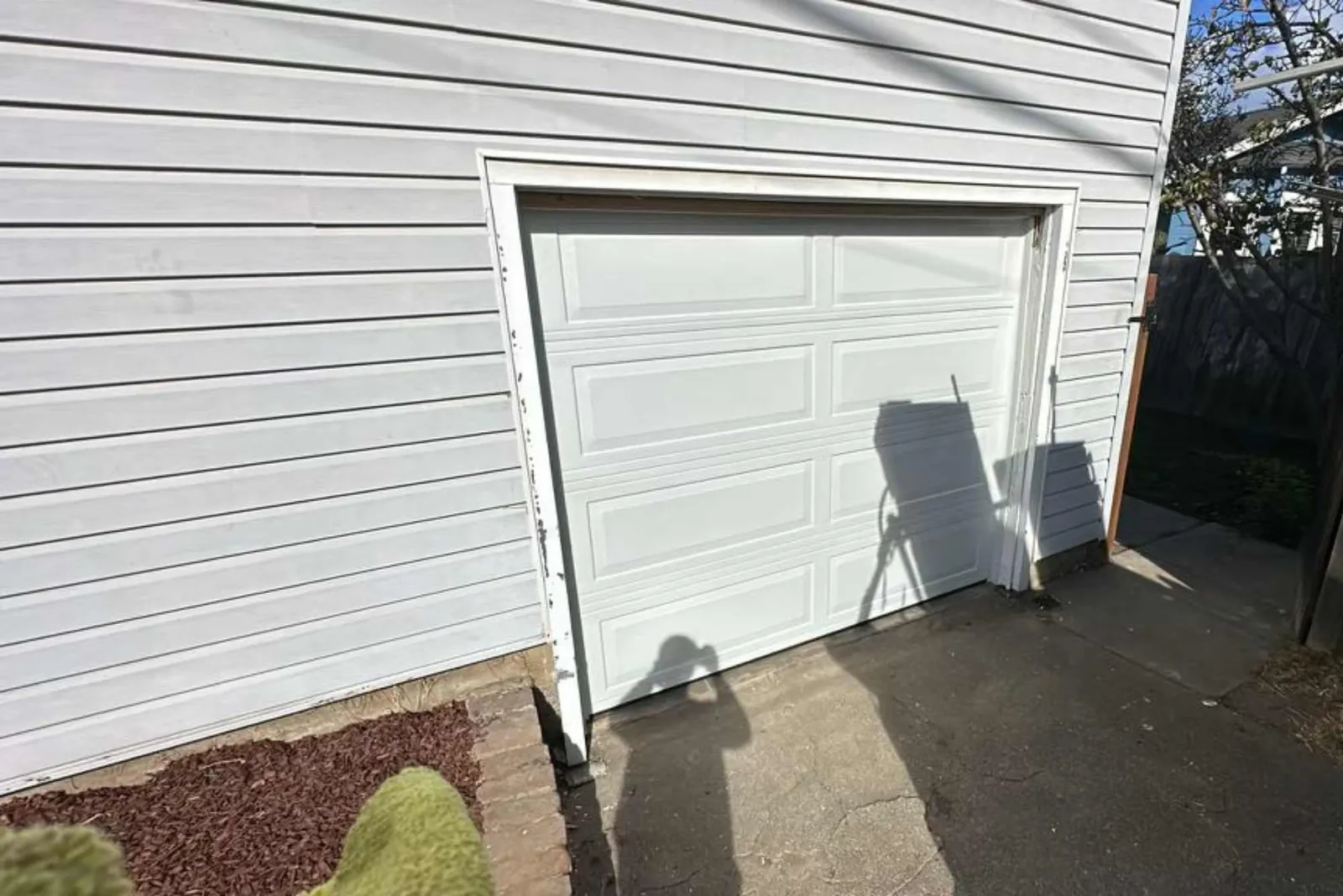
Garage Door Replacement Cost in San Ramon: What Drives the Quote
Learn how size, material, insulation, windows, and removal shape your garage door replacement cost in San Ramon—and what...
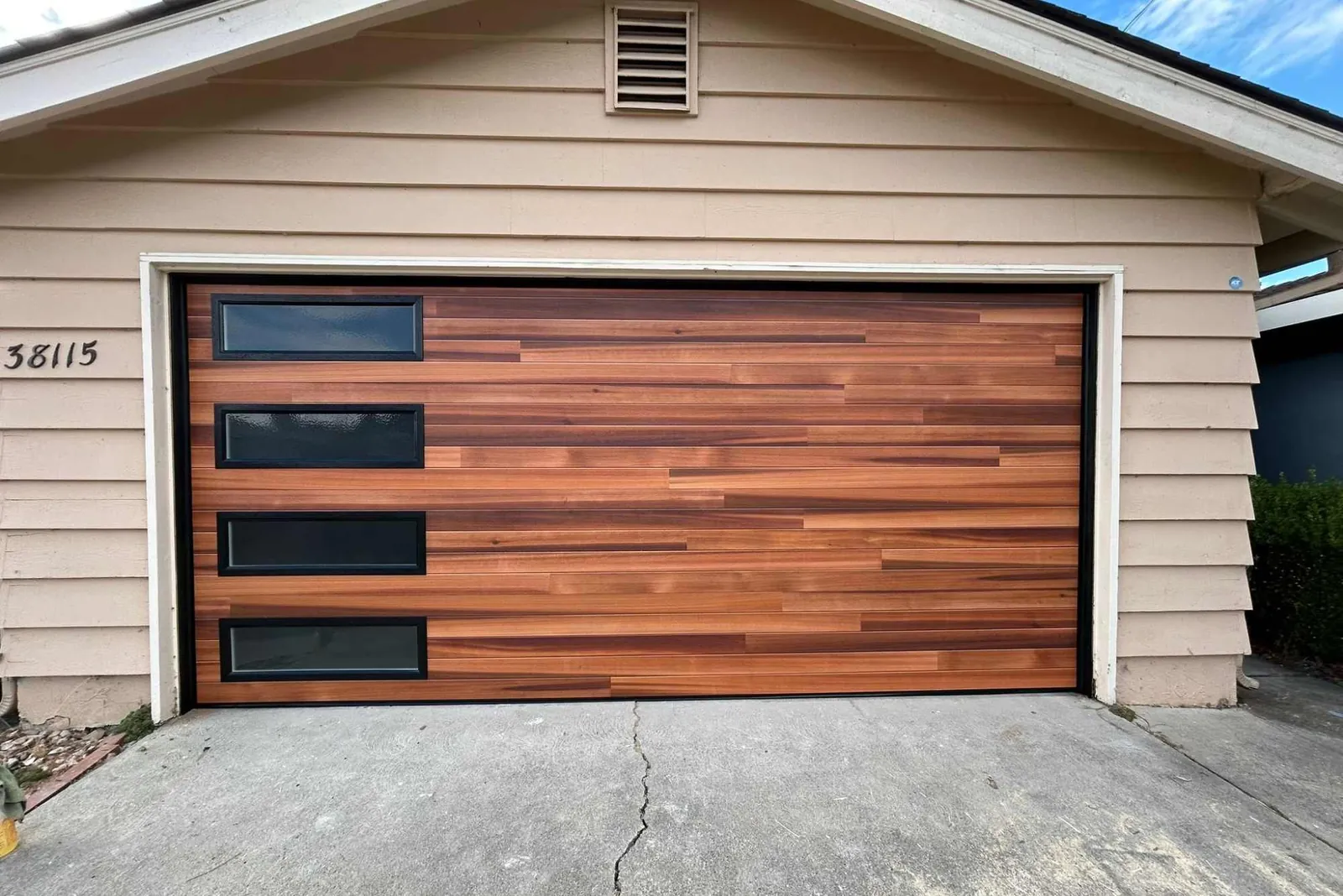
Wood Garage Door Replacement: Switching to Steel
Swapping a tired wood door for steel changes more than the paint color. Here is what happens to weight, springs, upkeep...
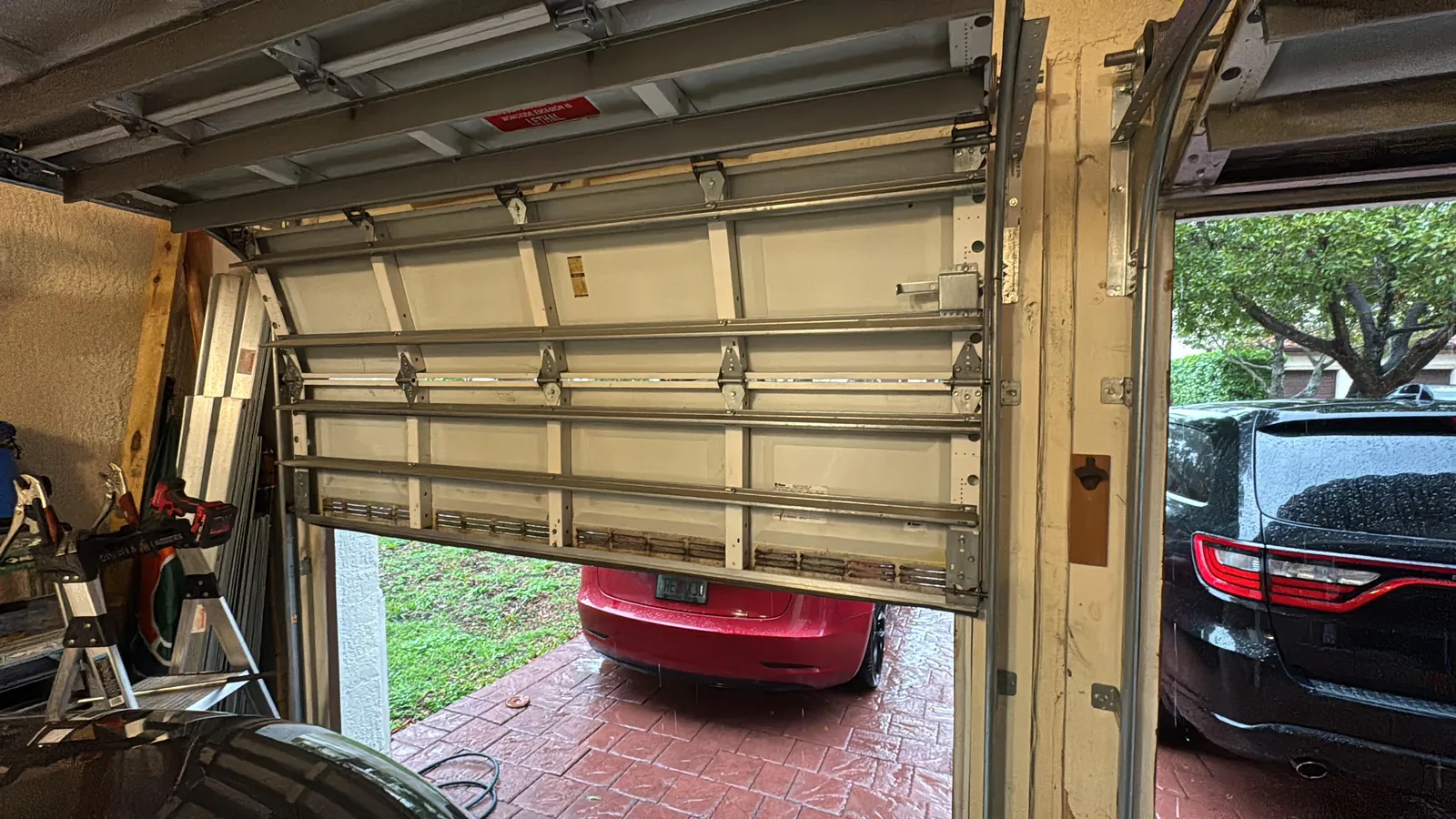
Garage Door Stuck Half Open: Emergency Steps to Take
A garage door stuck half open leaves your home exposed and the door under tension. Here are the safe emergency steps to...