
Garage Door Opener Repair or Replace: How to Decide
Age, noise, parts availability, and lift rating are the four factors that decide whether a garage door opener repair holds or a new opener is the better spend.
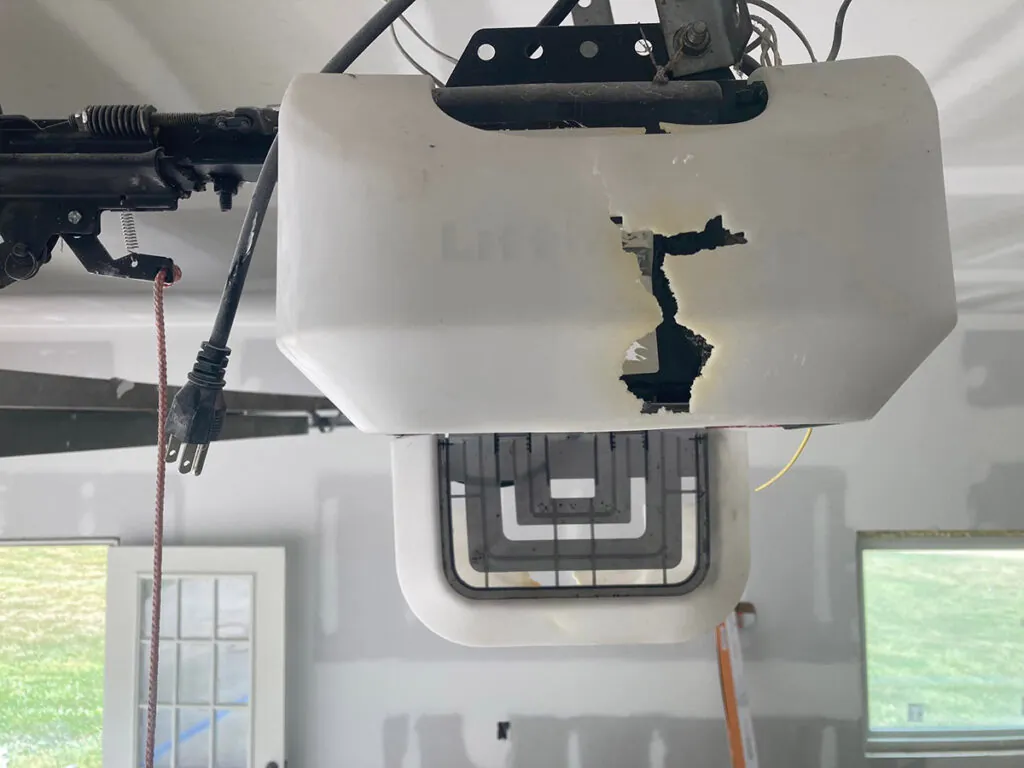
When your opener starts acting up, the first question is almost always whether garage door opener repair will last or whether you are throwing money at a unit that is already past its useful life. In San Ramon and across the East Bay and Tri-Valley, we see both outcomes every week. Some openers are one adjustment away from another decade of quiet service. Others are noisy, underpowered, and built around parts you can no longer buy. The difference usually comes down to four things: age, noise, parts availability, and lift rating. Get those straight and the decision becomes much less of a guess.
Start With Age and What It Tells You
Most residential openers are designed around a 10- to 15-year service life. That is not a hard expiration date, but it is a useful benchmark. A chain-drive unit from the early 2000s that has never been serviced is a different proposition than a belt-drive installed eight years ago on a well-balanced door. Age matters because it tells you what has already worn: the drive gear, the logic board capacitors, the trolley, the safety sensors, and the bushings that keep the motor quiet.
Age also tells you what the manufacturer is likely to support. When a unit is 15 years old and the logic board fails, the replacement board may cost more than the opener is worth, and the rest of the unit is still old. That is the point where a repair is technically possible but not sensible. On the other hand, a 7-year-old belt-drive that just needs a gear kit or a new capacitor is a straightforward fix, and the rest of the unit has plenty of life left.
One local note: Tri-Valley summer heat of 95–105°F is hard on opener electronics and lubricants. A unit mounted in a west-facing garage in Danville or Livermore runs hotter than the same model under shade in Oakland, and heat fatigue shows up in capacitors and control boards first. If your opener is over ten years old and has already had one board or capacitor replaced, treat a second electronic failure as a signal, not a coincidence.
Listen to the Noise: What It Reveals
Noise is diagnostic. A chain-drive opener is never silent, but it should be a steady mechanical hum, not a grind, a screech, or a bang at the start and stop. A grinding sound often points to a worn drive gear or a dry trolley. A screech can be a failing bearing or a roller that has lost its lubrication. A bang at the end of travel is usually the door slamming into the limit, which stresses the opener and the door hardware alike.
Here is the practical split. If the noise comes from the opener head and the unit is otherwise young, the fix is usually internal and worth doing. If the noise comes from the door itself — squealing rollers, a dry torsion spring, a track that is out of alignment — the opener is often the victim, not the cause. Replacing a healthy opener will not quiet a noisy door. In that case, the better spend is a tune-up and hardware service, which you can read about on our Gate & Garage Door Maintenance page. We check the door first because the opener only does the lifting; the springs and rollers do the work.
One more noise clue: a unit that has become noticeably louder over a single season, rather than gradually over years, usually has a specific failing part. That is a repair diagnosis, not a replacement decision, until the part is identified.
Parts Availability: The Quiet Deal-Breaker
This is the factor homeowners underestimate most. Openers are not like cars; manufacturers discontinue models and stop stocking proprietary parts on their own schedule. When a logic board, a travel module, or a proprietary remote receiver is no longer available, a repair can become a scavenger hunt. We will not install a used board from an online marketplace and call it a repair, because the failure rate on salvage electronics is high and the workmanship warranty would be meaningless.
Ask a simple question: is the failed part a current, supported component? Common wear items — belts, gears, capacitors, trolleys, safety sensors, and standard remotes — are broadly available for most major brands. Proprietary control boards, older screw-drive transmissions, and discontinued side-mount units are where availability gets thin. If the part is unavailable or only available as salvage, replacement is the honest answer.
Parts availability also affects what happens after the repair. A unit that is on its last supported board is one failure away from the same conversation. When we quote a repair, we tell you plainly whether the part is current and whether the model is still supported. That is part of the itemized written estimate we provide before any work starts.
Lift Rating: Is the Opener Matched to the Door?
An opener has a lift rating, and the door has a weight. When the two are mismatched, the opener works too hard, runs hot, and fails early. This is common in older tract homes where a builder-grade opener was installed on a steel door and the door was later replaced with an insulated model, or where a heavy carriage door in Alamo, Danville, or Blackhawk is being driven by a unit that was never sized for it.
You can often tell by behavior. If the door opens fine by hand but the opener strains, slows, or stops partway, the unit is working beyond its rating. If the opener is hot to the touch after one cycle, that is another sign. A repair on an undersized opener will not fix the underlying problem; the right move is a correctly rated unit, sometimes a jackshaft opener for a high-lift or carriage door.
Lift rating also interacts with balance. A door with a tired spring feels heavy, and the opener compensates until it cannot. Before condemning the opener, we check the door balance and spring condition. If the spring is the real problem, replacing the opener would be the wrong spend entirely. Our Garage Door Spring Repair page explains what that part does and why it carries the whole door.
When a Repair Holds
A repair is usually the right call when the unit is under about ten years old, the failed part is a current wear item, the door is balanced and correctly sized, and the rest of the opener is in good condition. In those cases, a gear kit, a belt, a capacitor, a trolley, or a set of safety sensors restores quiet, reliable operation for a fraction of replacement cost.
Safety devices deserve a specific mention. Photo eyes and reverse settings are the parts that protect people and pets, and they fail more often than the motor. If the door reverses for no reason or will not close, the opener may be fine and the sensors may be misaligned or dirty. That is a repair, not a replacement, and our Garage Door Sensor & Safety Repair page covers what we check. We test force settings and reverse behavior on every opener call because a quiet opener with a bad safety circuit is still a hazard.
- Repair holds when: the unit is under ten years old, the part is current and supported, the door is balanced, and the lift rating matches the door.
- Repair holds when: the problem is safety sensors, a belt, a gear kit, a capacitor, or a trolley — standard wear items with known service life.
- Repair holds when: the noise traces to the door hardware, not the opener head, and a tune-up resolves it.
When Replacement Is the Better Spend
Replacement makes more sense when the unit is past its service life and the failure is in a proprietary part, when the opener is undersized for the door, when it has had repeated electronic failures, or when the model is no longer supported. A new opener also brings modern safety features, quieter belt or jackshaft operation, and battery backup options that older units lack.
Replacement is not automatically the answer just because a unit is old. A 14-year-old opener with a failed sensor is still a sensor repair. The decision should be driven by the four factors above, not by age alone. When replacement is right, we size the new unit to the door, check the springs and balance first, and fit it with the manufacturer warranty on the parts and our workmanship warranty on the installation. You can see the scope on our Garage Door Opener Replacement page.
One caution: if the door is off its track or stuck open, stop cycling the opener. Forcing it can damage the door and the unit. That is an emergency call, and we triage it by securing the opening first, then quoting. See Emergency Garage Door Repair for how that works. For everything else, a scheduled diagnostic is the efficient path.
How We Diagnose It on Site
We do not decide from the driveway. The technician runs the door, checks balance and spring condition, inspects the opener drive, tests the safety reverse and force settings, and confirms the model and part availability. Then you get an itemized written estimate before any work starts, so you can see the repair cost next to the replacement cost and decide with real numbers.
If you want that diagnostic, call (925) 744-7433 or use our free quote request form. We serve San Ramon and the East Bay and Tri-Valley, including Danville, Alamo, Blackhawk, Dublin, Pleasanton, Livermore, Walnut Creek, Concord, Pleasant Hill, Lafayette, Moraga, Martinez, Clayton, Orinda, Castro Valley, Hayward, Union City, Fremont, Sunol, Oakland, Berkeley, San Leandro, Pittsburg, Antioch, Brentwood, Oakley, Discovery Bay, Byron, and Benicia. Our hours are Monday–Friday 7:00am–7:00pm and Saturday 8:00am–5:00pm; after-hours calls are handled as emergency calls or returned the next working morning.
FAQ
My opener is 12 years old and grinding. Repair or replace?
Grinding often means a worn drive gear, which is a standard part on many models. At 12 years, the deciding factor is whether the rest of the unit is sound and the part is current. We check both on site and quote the repair against replacement so you can compare.
Can I replace just the opener and keep my existing door?
Yes, in most cases. The new opener must be rated for the door's weight and the door must be balanced with working springs. We check balance and spring condition before fitting a new unit so the opener is not compensating for a door problem.
Why does my opener run but the door does not move?
That usually points to a broken spring, a snapped cable, or a disconnected trolley rather than the opener itself. Do not keep cycling it. Stop and have the door checked, because a door with a failed spring can come down hard.
Is a noisy opener a sign it needs replacement?
Not necessarily. Noise often comes from the door hardware — rollers, tracks, or a dry spring — and a tune-up quiets it. If the noise is inside the opener head and the unit is young, an internal repair is usually the right fix.
Do you charge to tell me which way to go?
The failed part is identified on site and the price is itemized in writing before any work starts. Call (925) 744-7433 to schedule the earliest available appointment.
A note from Palm Gates and Garage Door Repair
We repair, replace and service garage doors, openers and driveway gates across San Ramon and the wider East Bay. If something in this article sounds like your door, call (925) 744-7433 — we will tell you what it usually means and what the next open appointment looks like.
Keep reading
More articles from the journal
Garage Door Repair Cost in San Ramon: A Local Guide
A straight answer on garage door repair cost in San Ramon: the common repair categories, what moves the number up or dow...
Broken Garage Door Spring: What Happens Next
A broken garage door spring is dangerous, not just inconvenient. Here's what happens, what not to touch, and how a sprin...
Garage Door Spring Replacement Cost in San Ramon
What drives garage door spring repair cost in San Ramon and the East Bay, why springs are quoted as a pair, and what eve...